
📅 Nov 02, 2025 · 9 min read
Why Is My Furnace Blowing Cold Air?
5 common root causes of cold air from your vents, including dirty filters, flame sensor oxidation, and limit switch trips.
Why a Furnace Blows Cold Air →Direct Answer: Work through four checks before calling: confirm the thermostat is on Heat and set above room temperature with fresh batteries, confirm the furnace power switch is on and the breaker has not tripped, check the filter is not fully blocked, and look for a flashing diagnostic code on the furnace. Then protect the plumbing. If you smell gas, leave first and call from outside.
Gas odour changes the order of everything. If you smell gas, do not operate switches, do not use the thermostat and do not search for the source. Leave the building, take everyone with you, and call the gas utility's emergency line and the fire department from outside. A furnace no-heat call is an inconvenience; a gas leak is an evacuation. The same applies to a sounding carbon monoxide alarm.
Assuming no gas odour, the thermostat is the fastest thing to rule out. Confirm it is set to Heat rather than Cool or Off, that setpoint is several degrees above current room temperature, and that the display is not dim or blank. Battery-powered thermostats fail in cold weather more often than people expect, and a thermostat that looks alive can still be sending no call for heat. Replacing the batteries takes a minute and resolves a meaningful share of overnight calls.
A useful triage sequence has four stages: safety first, then power and controls, then the diagnostic code the furnace is already reporting, then protecting the building while help is on the way. That last stage matters in Colorado Springs, where overnight temperatures below zero can put plumbing at risk within hours in an unheated crawlspace or exterior wall.
The furnace power switch is a genuine cause, not a formality. It looks like an ordinary light switch, usually mounted on or near the unit, and it is switched off accidentally more often than it is faulty. Check it, then check the breaker panel for a tripped breaker labelled "Furnace" or "HVAC". Reset a tripped breaker once. If it trips again immediately, stop — that is an electrical fault that needs a technician rather than another reset.
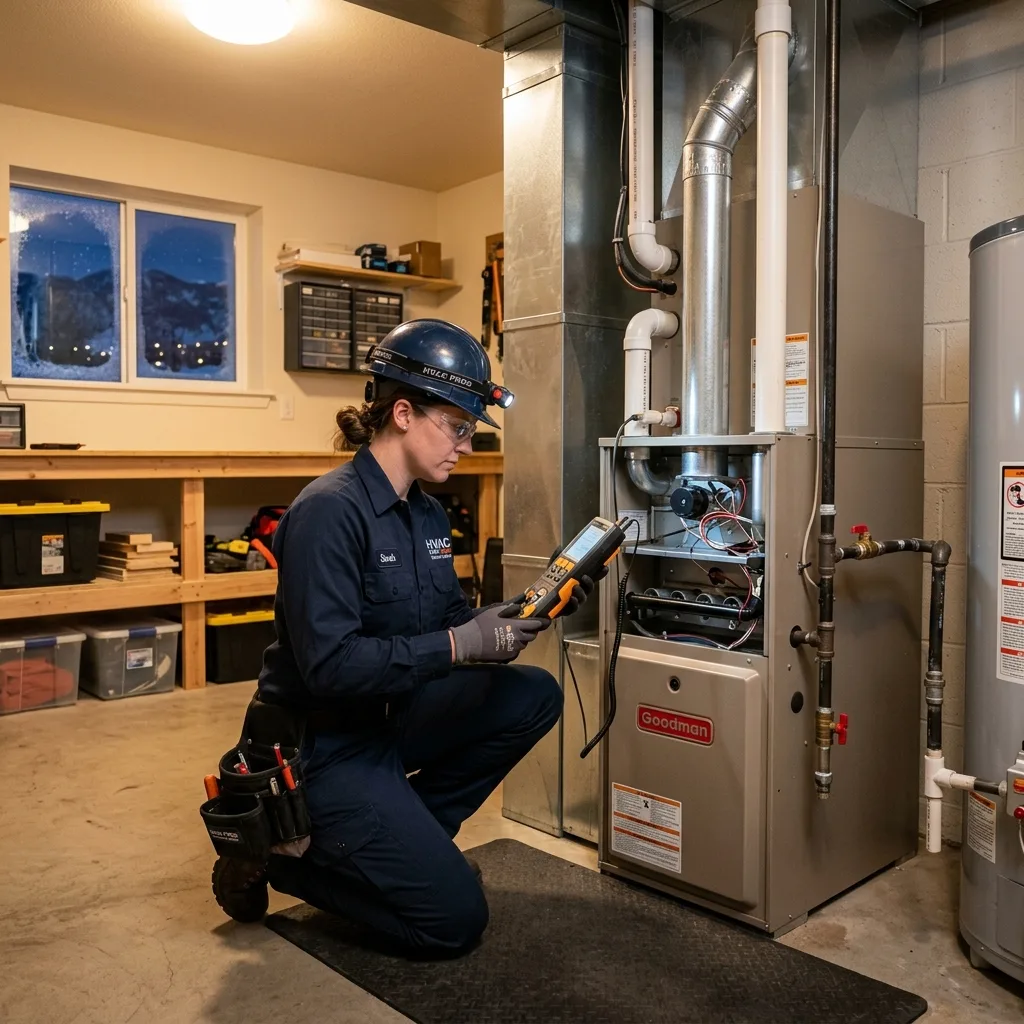
Modern furnaces report their own faults. Most have a small viewing window on the control board showing an LED that blinks a pattern, and the legend decoding those patterns is usually printed inside the access panel. Write the pattern down before cycling power, because the code clears when you do. Telling a dispatcher that the board is flashing three short blinks lets the technician arrive with the pressure switch or inducer already on the van.
While waiting, protect the plumbing. Open the cabinet doors under kitchen and bathroom sinks so warm room air reaches supply lines on exterior walls, let faucets on the coldest walls drip slightly, and close off unused rooms to concentrate whatever heat remains. Keep the garage door shut if any plumbing runs through it. In Monument, Woodmoor and Black Forest, where overnight lows run well below the city's, these steps buy genuine hours.
Three situations warrant an immediate call at any hour rather than waiting for morning: a gas odour or a sounding carbon monoxide alarm, which means evacuate first; indoor temperature falling toward 50°F with plumbing on exterior walls or in an unheated crawlspace; and any household with infants, elderly residents or anyone with a medical condition affected by cold. Everything else can usually wait for a scheduled morning appointment.
Breaker behaviour is the other bright line. A breaker that trips once and holds after a reset may simply have seen a surge. A breaker that trips again immediately indicates a short or a failing motor drawing excessive current, and repeated resets risk damage. Similarly, a furnace that locks out after three ignition attempts has decided not to try again for a reason — forcing it through repeated power cycling bypasses a safety decision the control board made deliberately.
| Step | What to Check | What It Rules Out | If It Fails |
|---|---|---|---|
| 1. Safety | Gas odour, CO alarm | Leak or combustion emergency | Evacuate, call from outside |
| 2. Thermostat | Heat mode, setpoint, batteries | No call for heat | Replace batteries, retry |
| 3. Power | Furnace switch, breaker | Interrupted supply | Reset once only, never twice |
| 4. Diagnostic code | LED blink pattern on board | Unknown fault | Write it down before cycling power |
| 5. Protect plumbing | Cabinet doors, dripping taps | Freeze damage while waiting | Concentrate heat, close unused rooms |
If you smell gas, leave the house and call from outside. For a no-heat failure, note the blinking code before cycling power and call 719-602-8787 — dispatch runs 24 hours.
Direct Answer: If you smell gas or a CO alarm is sounding, leave the building and call from outside before anything else. Otherwise: confirm the thermostat is on Heat, set above room temperature, with working batteries; confirm the furnace power switch is on and the breaker has not tripped; check the filter; and note any flashing diagnostic code on the control board before cycling power.
Direct Answer: Because it clears when you cut power. Most furnaces report faults through an LED that blinks a pattern, with the legend printed inside the access panel. Telling a dispatcher the exact pattern lets the technician arrive with the likely part already on the van, which often turns a two-visit repair into one.
Direct Answer: Three situations justify an immediate call at any hour: a gas odour or sounding carbon monoxide alarm, indoor temperature falling toward 50°F with plumbing on exterior walls or in an unheated crawlspace, and any household with infants, elderly residents or someone medically affected by cold. Other no-heat failures can usually wait for a scheduled morning appointment.
Direct Answer: Open cabinet doors under kitchen and bathroom sinks so room air reaches supply lines on exterior walls, let taps on the coldest walls drip slightly, close off unused rooms to concentrate remaining heat, and keep the garage door shut if plumbing runs through it. In Monument, Woodmoor and Black Forest, where overnight lows run below the city's, these steps buy real hours.