📅 Dec 14, 2025 · 12 min read
What Affects Furnace Replacement Cost?
Break down itemized furnace replacement costs in Colorado Springs, including equipment, PPRBD permits, ductwork, and labor.
Furnace Replacement Cost Factors →Direct Answer: Repair when the furnace is under twelve years old, the heat exchanger is sound and the quoted repair costs less than about a third of replacement. Replace when the heat exchanger is cracked, when the unit is past fifteen years, or when repair cost multiplied by the furnace's age approaches the price of new equipment. At altitude, a cracked exchanger is always a replace decision.
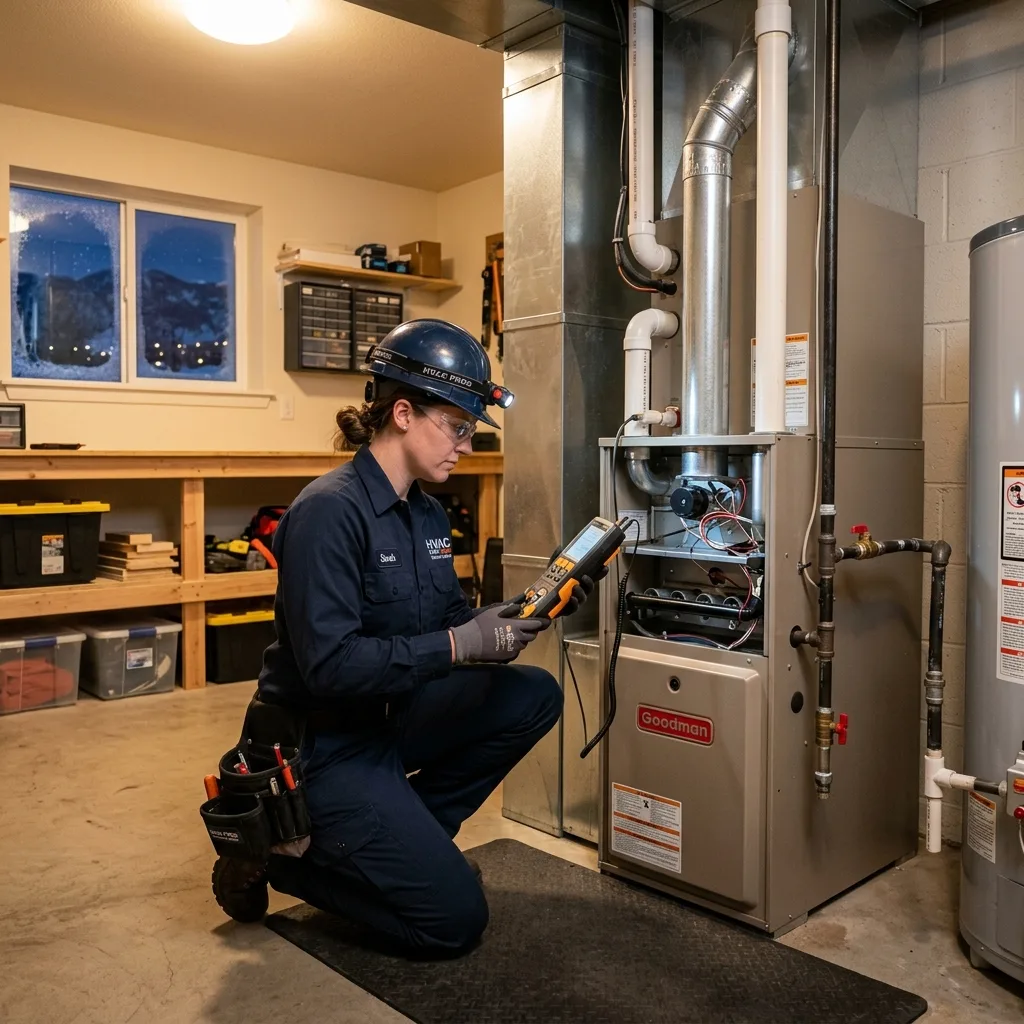
The heat exchanger is the one finding that ends the discussion. It is the metal barrier between combustion gases and the air circulating through your home, and a crack lets carbon monoxide into the airstream. Exchangers are occasionally covered by a long manufacturer warranty, but the labour to replace one in a fifteen-year-old furnace often approaches the cost of a new unit — and the rest of the equipment is the same age as the failed part.
For everything short of that, age and cost do the work. A widely used heuristic multiplies the repair quote by the furnace's age in years; if the product exceeds the replacement price, replacement is the better economic choice. A $400 repair on a six-year-old furnace scores 2,400 — clearly a repair. The same $400 repair on an eighteen-year-old furnace scores 7,200, which is squarely in new-equipment territory in the Colorado Springs market.
Four inputs drive the decision: the furnace's age against its expected service life, heat exchanger condition, the cumulative repair spend over the past two seasons, and the efficiency gap between the existing unit and current equipment. In a climate with more than 5,500 heating degree days, that last factor carries more weight here than it would in a mild region, because the efficiency difference runs for a long season every year.
Expected service life in Colorado Springs runs shorter than national averages suggest, and elevation is why. A furnace here operates 1,800 to 2,400 hours per season under a derate of 24% or more, meaning it runs longer to deliver the same heat. Fifteen to twenty years is a realistic range at city elevation; mountain properties in Woodland Park or Black Forest frequently see the lower end of that band.
Cumulative repair spend is the signal homeowners most often ignore. Two or more separate service calls in a single heating season, particularly if they involved different components, indicates the equipment has entered its failure cluster rather than suffering isolated bad luck. At that point each further repair buys progressively less remaining life, and the money is better spent as a deposit on equipment that comes with a warranty.
The efficiency case is real but slower than sales pitches suggest. Moving from a 1990s 65% AFUE furnace to a modern 96% unit is a genuine step change and typically pays back within a decade in this climate. Moving from an existing 80% unit to 96% is a narrower gain and depends heavily on gas rates and whether the venting change — from a masonry chimney to PVC sidewall — adds cost and leaves a shared water heater needing its own solution.
Work through it in order. First, has a technician confirmed the heat exchanger is sound, using a camera or a combustion analyser reading taken under blower load? If not, get that answer before discussing anything else, because it can override the entire economic analysis. Second, what is the furnace's age against a fifteen-to-twenty-year realistic local life? Third, what have the last two seasons cost in repairs? Fourth, what is the quoted repair against current replacement pricing?
If replacement is the answer, the timing is worth controlling. Replacing in spring or early autumn means equipment choice rather than whatever is on the truck, a scheduled PPRBD permit and inspection rather than a rushed one, and access to seasonal manufacturer promotions and the current federal 25C credit. Replacing during a January failure means paying for urgency and accepting whatever is in stock.
| Finding | Repair Indicated | Replace Indicated | Local Note |
|---|---|---|---|
| Heat exchanger | Intact, verified | Any confirmed crack | Always replace — CO risk at altitude |
| Furnace age | Under 12 years | Over 15 years | Local life is 15–20 yrs, shorter in the mountains |
| Repair cost | Under ~1/3 of replacement | Cost × age exceeds new price | $400 at 18 yrs scores 7,200 — replace |
| Recent repair history | First fault in years | Two or more in one season | Failure cluster, not bad luck |
| Current efficiency | Already 90%+ | 65–80% AFUE | 5,500+ HDD makes the gap compound |
The heat exchanger answer changes everything else, so get it first. We inspect under blower load and give you the reading, not just an opinion. Call 719-602-8787.
Direct Answer: Replace when the heat exchanger is cracked, when the unit is past fifteen years, or when the repair quote multiplied by the furnace's age in years exceeds the replacement price. Repair when the unit is under twelve years old, the exchanger is verified sound, and the quote is under roughly a third of replacement cost.
Direct Answer: Fifteen to twenty years at city elevation, with mountain properties in Woodland Park and Black Forest frequently at the lower end. Local furnaces run 1,800 to 2,400 hours a season under a derate of 24% or more, so they operate longer to deliver the same heat than an equivalent unit at sea level would.
Direct Answer: In practice, almost always. A crack lets combustion gases including carbon monoxide into the air circulating through your home. Some exchangers carry long warranties, but the labour to fit one in a fifteen-year-old furnace often approaches new equipment cost — and every other component is the same age as the part that just failed.
Direct Answer: It depends on the starting point. Replacing a 1990s 65% AFUE furnace with a 96% unit is a genuine step change that typically pays back within a decade given more than 5,500 heating degree days a year. Going from an existing 80% to 96% is a narrower gain, and the venting change from masonry chimney to PVC can add cost and leave a shared water heater needing its own fix.