
📅 Oct 10, 2025 · 10 min read
Why Fall Furnace Inspections Matter
Protect your home from carbon monoxide risks and sudden winter breakdowns with a pre-season safety inspection.
Furnace Inspection Before Winter →Direct Answer: Start furnace preparation in September, not on the first cold night. The sequence that prevents most mid-winter failures is short: replace the filter, clear the flue intake and exhaust terminations, test the thermostat and its batteries, run the furnace for a full cycle while there is still time to fix what it reveals, and verify every carbon monoxide alarm. Book professional service before October, when scheduling is still open.
The first cold snap in El Paso County produces a predictable surge of no-heat calls, and a large share of them are failures that were already present in September and simply were not noticed. A furnace that sat idle through a warm autumn can have a cracked inducer hose, a seized condensate pump or a dust-fouled flame sensor, none of which announce themselves until the unit is asked to run for hours at a stretch.
Running the system deliberately in early autumn is the highest-value ten minutes of the season. Set the thermostat well above room temperature and let the furnace complete several full cycles. Listen for the inducer motor, the ignition sequence and the blower engaging in order. Note any burning-dust smell, which is normal for the first few minutes, versus an acrid or electrical smell, which is not. A failure discovered in September is a scheduled repair; the same failure in January is an emergency call.
A realistic preparation plan covers five areas: air filtration and return-air paths, venting and combustion air, controls and thermostat, safety devices including carbon monoxide alarms, and the building envelope itself. The envelope belongs on the list because a furnace that is correctly sized and perfectly serviced still cannot keep up with a house that leaks heat faster than the equipment can replace it.
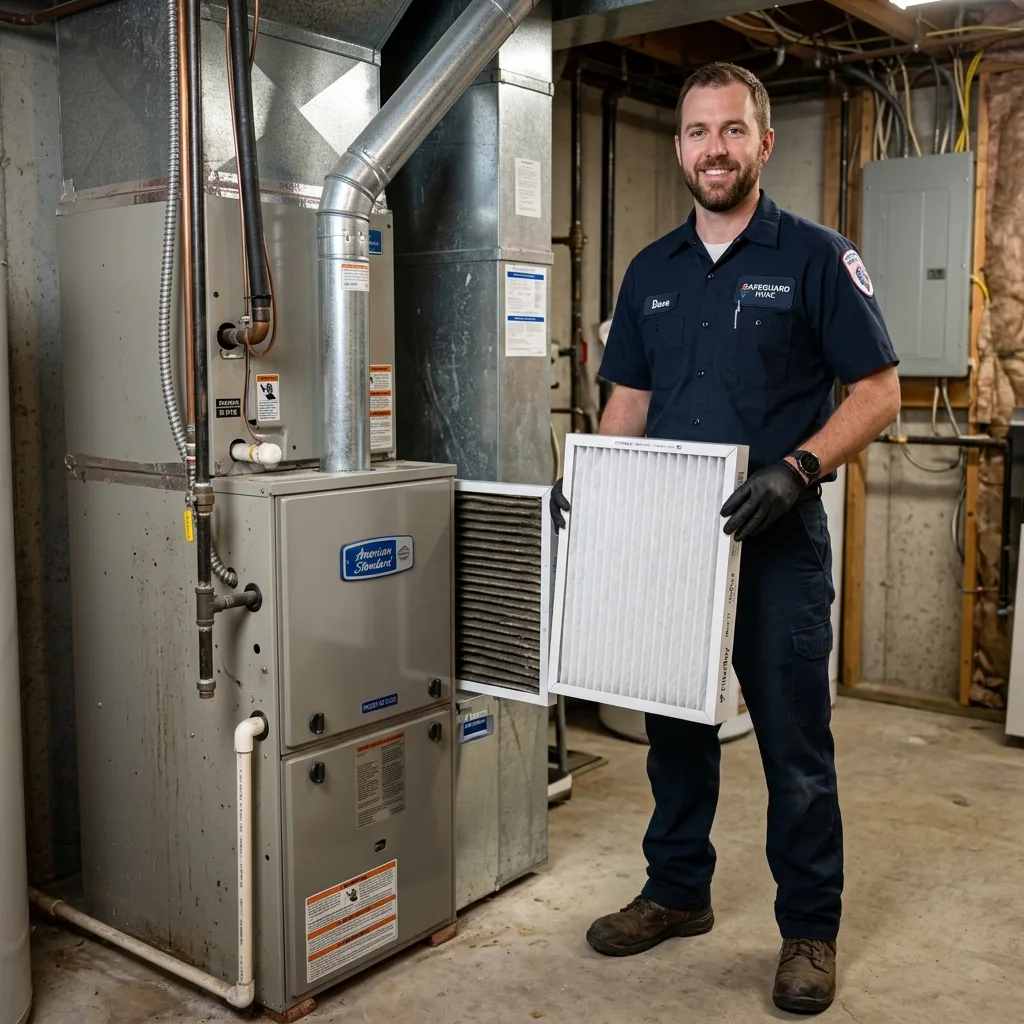
Filters are the most common single point of failure and the cheapest to address. A one-inch pleated filter in a Colorado Springs home with pets or nearby construction may need changing every 30 to 60 days during the heating season; a four-inch media filter typically lasts six to twelve months. A restricted filter raises static pressure, drives up the temperature rise across the heat exchanger and eventually trips the high-limit switch, which the homeowner experiences as short-cycling.
Venting deserves a walk outside. High-efficiency furnaces vent through PVC pipes that terminate at a sidewall, usually within a few feet of grade, which puts them in the path of drifting snow, landscaping growth and ice build-up from a roof edge. A blocked intake or exhaust triggers a pressure-switch lockout and shuts the furnace down as designed. Keeping a clear radius around both terminations, and checking after every significant snowfall, prevents a genuinely common winter callout.
Carbon monoxide alarms are the item most often deferred and least defensible to defer. Colorado requires CO alarms in residences with fuel-burning appliances, and the sensors have a finite service life — typically five to ten years — after which the unit may still chirp and test but no longer detect reliably. Check the manufacture date printed on the back, not just the battery. At altitude, where incomplete combustion is a more likely failure mode, this is not an optional item.
September is the window for the things that need lead time: replace filters, run the system through full cycles, check CO alarm manufacture dates, and book professional service while the schedule is open. October is for the annual tune-up itself, including combustion analysis and a heat exchanger inspection, ideally completed before the first sustained cold arrives in the third or fourth week. Mountain properties above 7,000 feet should target early October rather than late.
From November onward the work shifts from preparation to monitoring. Check vent terminations after each snowfall, change filters on schedule rather than by appearance, and treat any change in sound, smell or cycle length as worth a phone call rather than a wait-and-see. Households in Black Forest, Woodland Park and Cascade that rely on propane should also confirm tank levels ahead of forecast cold, since delivery windows lengthen sharply during a regional cold snap.
| Timing | Task | What You Are Checking | Why It Matters Here |
|---|---|---|---|
| September | Replace filter, run full cycles | Ignition, blower, unusual sounds | Finds faults while repair slots are open |
| September | Check CO alarm dates | Manufacture date, not battery | Sensors expire in 5–10 years |
| October | Professional tune-up | Combustion analysis, heat exchanger | Verifies safe operation at altitude |
| November | Clear vent terminations | Snow, ice and plant growth | Blocked intake causes pressure lockout |
| All winter | Filter on schedule | Static pressure and temp rise | Restriction trips the high-limit switch |
Booking an autumn tune-up in September or early October means a technician arrives on your schedule instead of during a cold-snap backlog. Call 719-602-8787 to reserve a slot.
Direct Answer: Aim for September or early October, before the first sustained cold arrives in the third or fourth week of October. Booking early means a scheduled appointment rather than a wait during the cold-snap backlog. Mountain properties above 7,000 feet in Woodland Park or Black Forest should target early October because their heating season starts sooner.
Direct Answer: A one-inch pleated filter typically needs replacing every 30 to 60 days during the heating season, sooner in homes with pets or nearby construction. A four-inch media filter usually lasts six to twelve months. Change on schedule rather than by appearance — a restricted filter raises static pressure and eventually trips the high-limit switch, which shows up as short-cycling.
Direct Answer: High-efficiency furnaces vent through PVC pipes terminating at a sidewall, often close to grade where drifting snow and roof-edge ice accumulate. A blocked intake or exhaust triggers a pressure-switch lockout and shuts the furnace down by design. Checking both terminations after every significant snowfall prevents one of the most common winter no-heat calls.
Direct Answer: Check the manufacture date printed on the back of the unit, not just the battery. CO sensors have a finite service life of roughly five to ten years, after which an alarm may still chirp and pass its test button while no longer detecting reliably. At altitude, where incomplete combustion is a more likely failure mode, replacing expired alarms matters more than it does at sea level.