
Heat Pump Replacement & Installation Colorado Springs — Cold-Climate Systems Sized for 6,035 Feet
Colorado Springs homeowners are increasingly choosing heat pumps for their ability to both heat and cool from a single system at 200–400% efficiency. But installing a heat pump at 6,035 feet is not the same as installing one at sea level. Capacity drops approximately 20% at altitude. Refrigerant behavior changes in thinner air. Standard systems designed for moderate climates will fail during Colorado Springs' sub-zero cold snaps. We install cold-climate heat pumps, ductless mini-splits, and dual-fuel systems — properly sized with Manual J calculations adjusted for altitude and commissioned with verified performance data.
How Much Does Heat Pump Installation Cost in Colorado Springs?
Heat pump installation in Colorado Springs costs $3,400–$30,000+ depending on system type and configuration. Ducted central heat pumps: $10,800–$24,600. Ductless mini-splits: $3,400–$7,000 per zone (whole-home multi-zone: $14,000–$30,000+). Dual-fuel systems: $12,000–$20,000+. All installations include equipment, professional labor, permits, refrigerant commissioning, and altitude-calibrated setup. Additional costs may apply for electrical panel upgrades ($4,800–$7,200) or ductwork modifications ($3,500–$8,000). Federal tax credits (30%, up to $2,000/year) and Colorado Springs Utilities rebates can reduce your net cost by $2,000–$5,000+. Free in-home estimates with transparent pricing. Call +1 (719) 602-8787.
Heat Pump Systems We Install
Each heat pump configuration offers unique advantages for Colorado Springs homes. The right choice depends on your home's infrastructure, heating needs, energy goals, and budget.
♻️ Ducted Cold-Climate Heat Pumps — $10,800–$24,600
Central ducted systems that replace or supplement your existing furnace, using your home's ductwork to deliver heated and cooled air throughout the house. Modern cold-climate models use inverter-driven variable-speed compressors that modulate continuously — running at exactly the capacity needed rather than cycling on and off. This provides more even temperatures, quieter operation, and dramatically lower operating costs compared to standard heat pumps. These systems maintain 100% rated heating capacity down to 0–5°F and continue operating to -13°F to -22°F. At altitude, we size these systems 15–20% above the calculated load to account for reduced air density capacity loss. Best for homes with existing ductwork in good condition.
📱 Ductless Mini-Split Systems — $3,400–$15,400+
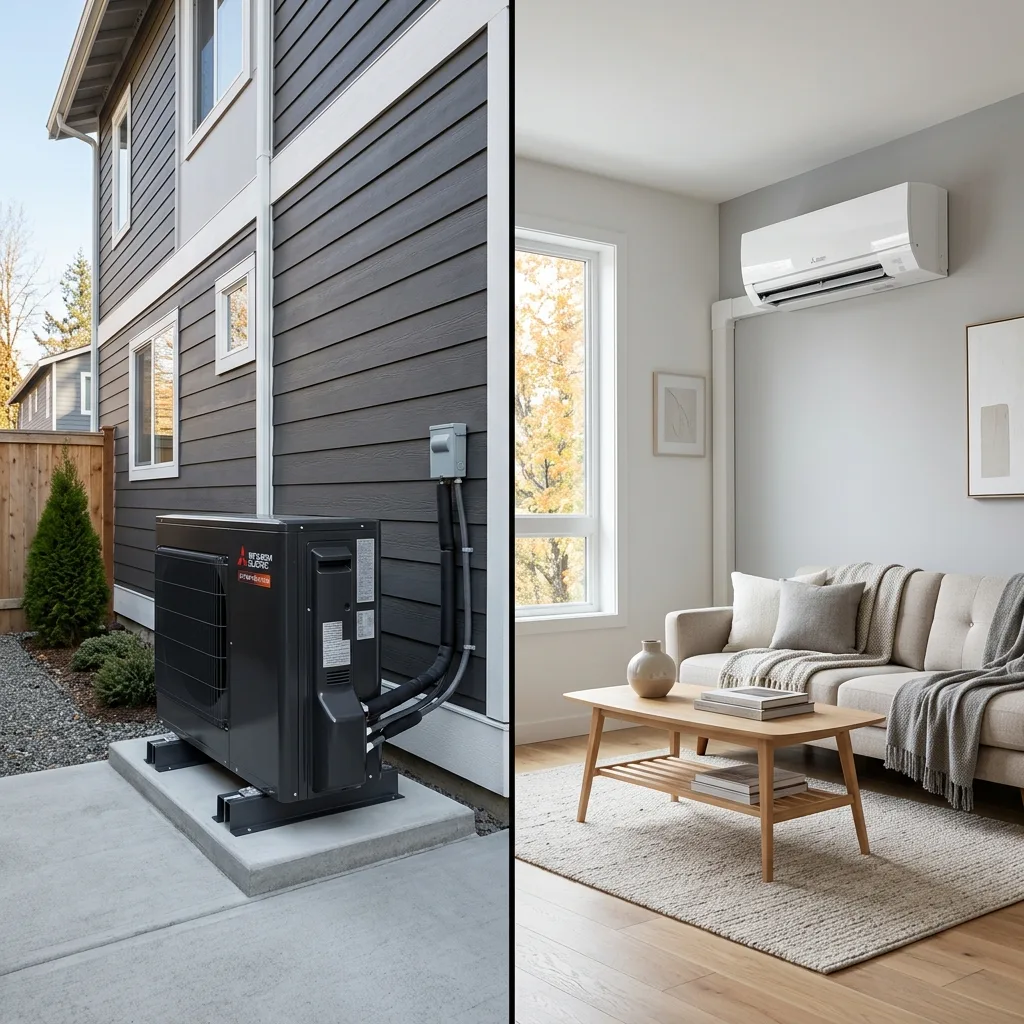
Individual wall-mounted indoor units connected to an outdoor compressor — no ductwork required. Each indoor unit is independently controlled, providing true zone heating and cooling. You heat only the rooms you are using, eliminating duct losses (which waste 20–30% of energy in typical duct systems). Single-zone installations start at $3,400 and serve one room. Multi-zone systems (2–5 indoor units) provide whole-home coverage at $14,000–$30,000+. Installation is minimally invasive — only a 3-inch wall penetration per indoor unit. Ideal for older homes without ductwork, additions, converted garages, home offices, and supplementing undersized existing systems.
🔄 Dual-Fuel Hybrid Systems — $12,000–$20,000+
The best of both worlds for Colorado Springs: an electric heat pump paired with a gas furnace. The heat pump provides efficient heating during moderate weather (above approximately 30–35°F) at 200–400% efficiency. When temperatures drop below the economic balance point — where electricity cost per BTU exceeds gas cost per BTU — the system automatically switches to the gas furnace for reliable, cost-effective heat during extreme cold. The switchover temperature is programmed based on local utility rates and equipment performance. Dual-fuel provides the lowest total heating cost across Colorado Springs' entire 6–7 month heating season while maintaining the guaranteed reliability of gas backup during the coldest weather.
Why Colorado Springs Requires Cold-Climate Heat Pumps
A standard heat pump — the type installed in Atlanta, Dallas, or Charlotte — loses significant heating capacity as outdoor temperatures drop below 30°F. By the time temperatures reach 0°F, a standard system may deliver only 40–60% of its rated capacity. In Colorado Springs, where winter lows regularly reach the single digits and occasionally dip below 0°F, a standard heat pump cannot keep your home comfortable without relying heavily on expensive electric resistance backup heat.
Cold-climate heat pumps solve this problem with inverter-driven variable-speed compressors that adjust their speed and output continuously. Unlike standard compressors that run at full speed or shut off entirely, inverter compressors modulate between approximately 30% and 100% capacity. At low temperatures, they ramp up to maximum output to extract the limited heat available from cold outdoor air. Mitsubishi's Hyper-Heat technology maintains 100% rated capacity down to 5°F and continues operating to -22°F. Carrier's Greenspeed Intelligence is DOE Cold Climate Challenge certified. Daikin's Aurora line features advanced defrost logic and built-in drain pan heaters designed specifically for freezing environments.
How 6,035 Feet Changes Heat Pump Installation
Altitude affects heat pump installations differently than furnace installations. There is no combustion to derate — but air density, refrigerant behavior, and system capacity are all impacted.
📊 Capacity Drops ~20%
A heat pump absorbs heat from outdoor air and transfers it indoors. At 6,035 feet, lower air density means less thermal energy available per cubic foot of outdoor air. A system rated at 36,000 BTU at sea level may deliver only 28,000–30,000 BTU in Colorado Springs. This capacity reduction must be factored into the Manual J load calculation — otherwise the system will be undersized, running continuously on the coldest days without reaching your thermostat set point and triggering expensive auxiliary heat far more often than necessary. We calculate your home's heating load at altitude-adjusted capacity to ensure the system meets your actual needs.
🌡️ Refrigerant Behavior Changes
Refrigerant pressure is influenced by the temperature of the air passing over the outdoor coil. At altitude, lower air density affects heat transfer rates at the coil surface, producing different refrigerant pressures than sea-level installations. During commissioning, we verify superheat and subcooling using altitude-adjusted pressure-temperature charts specific to the refrigerant type (R-410A, R-32, or R-454B). Standard sea-level charts can lead to overcharging or undercharging — overcharging damages the compressor through liquid slugging, while undercharging reduces capacity and risks compressor overheating. Proper refrigerant charge is critical to both performance and equipment longevity.
💨 Airflow Calibration Required
Indoor airflow through the air handler or mini-split indoor unit must be calibrated for lower-density air. At altitude, the same blower speed moves a lower mass of air, which affects heat transfer at the indoor coil. Without airflow adjustment, the system may not deliver its full heating capacity indoors even when the outdoor unit is operating correctly. We verify airflow (in CFM per ton) using digital measurement tools and adjust fan speed settings to compensate for altitude. On ductless systems, we also verify that indoor unit fan speeds are set to the correct altitude-adjusted mode when the manufacturer provides one.
Tax Credits & Rebates for Heat Pump Installation
Significant financial incentives are available to reduce the cost of a new heat pump. These programs are specifically designed to encourage energy-efficient heating upgrades.
🏛️ Federal Tax Credit — Up to $2,000/Year
The Inflation Reduction Act (IRA) provides a federal tax credit of 30% of the total project cost, capped at $2,000 per year, for qualifying heat pump installations. This credit applies to equipment and labor costs for ENERGY STAR certified heat pumps. The credit is available through at least 2032. This is a tax credit (direct reduction of your tax bill), not a deduction — making it more valuable dollar-for-dollar. On a $15,000 heat pump installation, the federal credit alone can save you $2,000. We ensure all installations use qualifying equipment and provide the documentation you need for filing.
⚡ Colorado Springs Utilities Rebates
Colorado Springs Utilities (CSU) offers rebates for qualifying cold-climate air-source heat pump installations. Rebate amounts and eligibility criteria are updated periodically — check the CSU rebate portal for current programs. Utility rebates are typically applied after installation upon verification that the equipment meets efficiency requirements. These rebates can be combined with the federal tax credit — stacking incentives to maximize your total savings. We help you navigate the application process and ensure your system qualifies.
🏔️ Colorado State Incentives
Colorado offers additional state-level incentives for energy-efficient heating upgrades, including potential state tax credits and point-of-sale discounts available through registered contractors. These programs complement federal and utility incentives. When you combine federal tax credits ($2,000), utility rebates (varies), and state incentives, the total savings on a new cold-climate heat pump can reach $3,000–$5,000+ — significantly reducing the effective cost of your installation. During your estimate appointment, we calculate all available incentives and show you the net cost after applying every program you qualify for.
Our Heat Pump Installation Process
From initial consultation through post-installation verification, every step is designed to ensure your system performs optimally at altitude from day one.
Free In-Home Evaluation & Manual J
A licensed technician evaluates your home's insulation, windows, orientation, existing heating system, electrical capacity, and ductwork condition (if applicable). We perform a Manual J load calculation using Colorado Springs climate data at 6,035-foot altitude to determine your exact heating and cooling needs. For conversions from gas to heat pump, we also assess your electrical panel capacity — heat pumps require 30–60 amp dedicated circuits, and many older Colorado Springs homes may need a panel upgrade. This evaluation takes 60–90 minutes and is completely free.
System Selection & Incentive Calculation
We present one or more system options matched to your home's load, your priorities, and your budget. Each option includes detailed specifications, efficiency ratings (SEER2 and HSPF2), estimated annual operating costs, and applicable incentives. We calculate the total cost after federal tax credits, utility rebates, and state incentives — showing you the net investment. If financing is needed, we discuss available options. We explain the real-world differences between system types so you can make an informed decision without pressure.
Professional Installation
Our team arrives on schedule, protects your home, and installs the complete system. For ducted systems: outdoor unit placement on a level pad, refrigerant line installation, indoor air handler or coil installation, thermostat wiring, and ductwork connections. For mini-splits: outdoor unit positioning, refrigerant line routing through 3-inch wall penetrations, indoor unit mounting, and individual zone wiring. For dual-fuel: heat pump and furnace integration with switchover control programming. All electrical connections are made to code with proper dedicated circuits.
Commissioning & Performance Verification
After installation, we perform a complete commissioning: refrigerant charge verification using altitude-adjusted superheat/subcooling measurements, airflow verification (CFM per ton), temperature differential measurement across the indoor coil, defrost system testing, thermostat programming and calibration, safety control verification, and a full heating and cooling cycle observation. Every reading is documented in your commissioning report — this serves as your performance baseline and is required for manufacturer warranty registration.
Walkthrough, Warranty & Incentive Documentation
We walk you through your new system: thermostat programming (including Heat, Cool, and Auto modes), filter maintenance schedule, the difference between "Heat" and "Emergency Heat," and what normal operation looks and sounds like. We register your manufacturer warranty on your behalf and provide all documentation needed for federal tax credit filing, utility rebate application, and any applicable state incentives. You receive the complete commissioning report, warranty details, and incentive paperwork in one organized package.
Heat Pump Installation Cost Comparison
Compare heat pump system types side-by-side. Costs include equipment, installation, permits, and altitude-calibrated commissioning.
* Federal tax credits (up to $2,000) and utility rebates can reduce net costs by $3,000–$5,000+. All estimates provided in writing. Financing available.
Heat Pump Brands We Install
We install all major brands with a focus on cold-climate certified models proven to perform in Colorado's demanding climate and altitude.
🏅 Premium Cold-Climate
Mitsubishi Hyper-Heat (H2i), Carrier Greenspeed, Daikin Aurora — The industry's best cold-climate technology. Variable-speed inverter compressors that maintain 100% capacity at 5°F and operate to -22°F. Advanced defrost logic, ultra-quiet operation, and the highest efficiency ratings available. DOE Cold Climate Challenge certified. 12-year compressor warranties. Best for homeowners who prioritize performance and plan to stay long-term. These systems deliver the greatest energy savings and longest service life.
⚡ Performance Tier
Bosch IDS, Lennox, Trane, Bryant — Excellent cold-climate performance at a more moderate price point. Inverter-driven compressors with strong sub-zero heating capability. Bosch IDS is particularly popular for ducted installations in Colorado's climate. These brands offer 15–25% lower upfront cost than premium tier while delivering near-equivalent performance for most Colorado Springs applications. Strong warranty coverage and wide parts availability.
💰 Value Tier
Goodman, Rheem, York — Reliable heat pumps at the most accessible price point. Available in cold-climate configurations suitable for Colorado Springs when paired with auxiliary heat backup. These brands offer competitive warranties and the lowest entry cost for homeowners transitioning to heat pump technology — particularly when combined with a gas furnace in a dual-fuel configuration for cold-weather reliability. Standard 10-year parts warranty with registration.
SEER2 & HSPF2 — What the Numbers Mean
Heat pump efficiency is measured by two key ratings. Understanding them helps you compare systems and predict operating costs.
🌡️ HSPF2 — Heating Efficiency
The most important rating for Colorado Springs. HSPF2 (Heating Seasonal Performance Factor 2) measures how efficiently the heat pump converts electricity into heat across the entire heating season. A higher number means lower heating bills. HSPF2 of 7.8 = minimum federal standard. 9.0+ = good efficiency. 10.0+ = premium efficiency. A system with HSPF2 of 10.0 uses approximately 25% less electricity for heating than one rated at 7.8. Over a 15-year equipment life in Colorado Springs' 6–7 month heating season, this difference can total $4,000–$8,000 in savings.
❄️ SEER2 — Cooling Efficiency
SEER2 (Seasonal Energy Efficiency Ratio 2) measures cooling efficiency. While heating is the priority in Colorado Springs, cooling efficiency still matters during summer months. Minimum federal standard: 14.3 SEER2. Good: 15.0+. Premium: 18.0+. Higher SEER2 reduces air conditioning costs from June through September. Most cold-climate heat pumps achieve 15–22 SEER2 — significantly more efficient than older AC units or standard heat pumps, so your cooling costs will likely decrease even if cooling efficiency is not your primary purchase motivation.
💡 Real-World Comparison
For a typical 2,000 sq ft Colorado Springs home: replacing a 15-year-old gas furnace + AC with a cold-climate heat pump can reduce total heating and cooling costs by 30–50%. Replacing electric resistance heating (baseboard, wall heaters) with a heat pump can reduce heating costs by 50–75%. Replacing an older standard heat pump (HSPF of 7.0) with a cold-climate model (HSPF2 of 10.0) can reduce heating costs by 30%+. We calculate projected energy savings for your specific home using your actual utility rates during the estimate.
Heat Pump Installation — Your Questions Answered
Direct Answer: Complete heat pump installation ranges from $3,400 to $7,000 for single-zone ductless mini-splits and $10,800 to $24,600 for central ducted cold-climate heat pumps. Dual-fuel hybrid systems cost $12,000 to $20,000. Federal tax credits (up to $2,000) and local utility rebates save $3,000–$5,000+ total. Call +1 (719) 602-8787 for a free estimate.
Direct Answer: Yes. Standard heat pumps lose significant heating capacity below 30°F. Cold-climate heat pumps featuring variable-speed inverter compressors maintain 100% heating capacity down to 0°F and operate efficiently in sub-zero temperatures as low as -15°F to -22°F.
Direct Answer: A Dual-Fuel system pairs an electric heat pump with a high-efficiency gas furnace. The heat pump handles heating on mild days (35°F+), while the gas furnace automatically takes over on sub-zero winter nights, lowering annual utility bills by 30% to 50%.
Direct Answer: Under the Inflation Reduction Act (Section 25C), homeowners receive a 30% federal tax credit up to $2,000 for qualifying cold-climate heat pumps, combined with $500 to $1,500 in rebates from Colorado Springs Utilities (CSU) or Xcel Energy.
Direct Answer: Single-zone ductless mini-split installations take 1 day (6–8 hours). Central ducted heat pump replacement takes 1 to 2 days. Complex dual-fuel or multi-zone mini-split installations take 2 to 3 days.
Direct Answer: In Colorado Springs' heating-dominated climate, look for an HSPF2 rating of 9.0 to 10.0+ (heating efficiency) and a SEER2 rating of 15.0 to 22.0 (cooling efficiency). Higher HSPF2 ratings reduce winter electricity consumption by 25%+.
Direct Answer: Lower air density at 6,035 ft reduces heat pump heat exchange capacity by ~20%. Our technicians perform high-altitude Manual J load sizing to ensure proper compressor tonnage without oversizing electrical service requirements.
Direct Answer: We install cold-climate models from top manufacturers including Mitsubishi (Hyper-Heat H2i), Daikin (Aurora), Bosch (IDS), Carrier (Greenspeed), Lennox, Trane, Fujitsu, and LG.
Direct Answer: Yes. A single cold-climate heat pump provides both heating and air conditioning through your existing ductwork, eliminating the need for a separate outdoor AC unit and providing year-round home comfort.
Direct Answer: Heat pumps require precise airflow (~400 CFM per ton). During your free estimate, we measure static duct pressure and modify return drop transitions or supply plenums if necessary to guarantee whisper-quiet, efficient operation.
Get Your Free In-Home Estimate
Manual J load calculation, system recommendation, transparent pricing, and incentive calculation — all free, no obligation. Cold-climate certified. Altitude-calibrated from day one. Financing available.