
Furnace Repair in Black Forest, Colorado — Altitude-Calibrated at 7,100 Feet
Black Forest sits at 7,100 feet — a rural, forested community where propane furnaces, extreme cold, and limited access make specialized heating service essential.
Need Fast, Altitude-Calibrated Furnace Repair in Black Forest, CO?
Furnace Repair Colorado Springs provides certified 24/7 emergency and scheduled furnace repair, replacement, and seasonal maintenance in Black Forest, CO (7,100 ft). Sitting at 7,100 feet above sea level, gas heating systems in Black Forest require a mandatory 28.4% BTU derating per ANSI Z21.47 standards to compensate for lower air density, prevent incomplete combustion, and eliminate excess Carbon Monoxide (CO) risk. Our licensed furnace technicians carry altitude-calibrated orifice kits, digital flue gas analyzers, and OEM parts on every service truck, ensuring average emergency arrival times of under 90 min to Black Forest properties (Zip Code: 80908). Call +1 (719) 602-8787 for immediate 24/7 dispatch or a free in-home replacement estimate.
Furnace Repair & Heating Service for Black Forest Homeowners
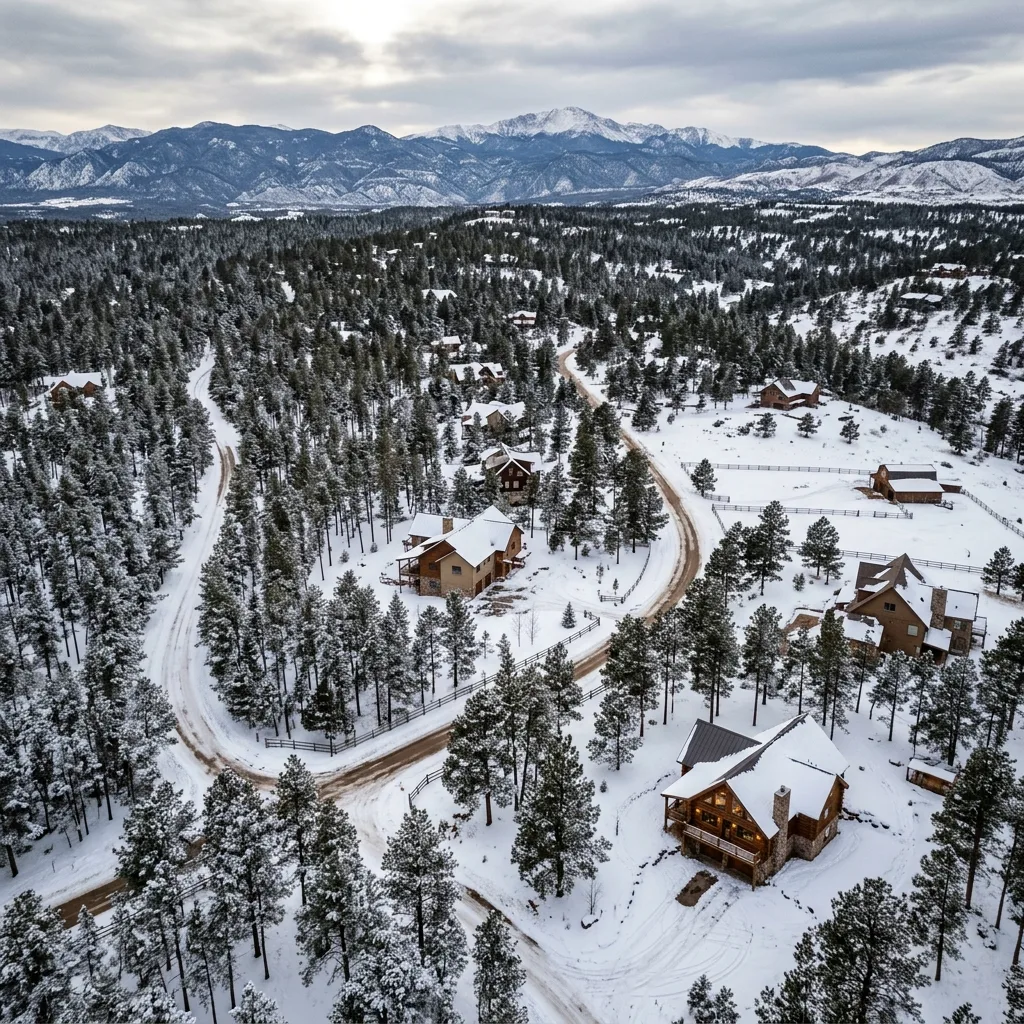
Black Forest is a rural, forested community northeast of Colorado Springs in unincorporated El Paso County. At approximately 7,100 feet — over 1,000 feet above Colorado Springs — it presents demanding conditions for heating systems. The community features large-lot properties (2.5–5 acres), ponderosa pine forests, and housing ranging from custom mountain homes to ranches and manufactured homes.
The dual-fuel challenge — propane versus natural gas — adds complexity. Propane furnaces require different orifice sizing than natural gas, and altitude adjustment applies on top of fuel conversion. A propane furnace at 7,100 feet needs both the propane kit and high-altitude orifice adjustment — two modifications that must both be correct. Our technicians carry orifice kits for both fuel types at Black Forest's elevation.
Black Forest Furnace Failure Modes by Building Era
Heating demands and failure patterns in Black Forest vary significantly depending on the age of your property and existing ductwork infrastructure.
Pre-2013 Rural & Ranch Homes
Many original Black Forest properties sit on multi-acre wooded lots with owner-built or custom homes, often running older 80% AFUE natural draft furnaces. Key failures: cracked heat exchangers from altitude thermal stress, faulty pilot assemblies, rusted draft hoods, and uninsulated ductwork causing 25–35% heat loss.
1990s–2000s Custom Homes
As Black Forest grew into a sought-after acreage community, larger custom homes from this era typically installed mid-efficiency forced-air units. Primary issues: failed igniters from thermal shock at 7,100 ft, flame sensor oxidation triggering lockouts, and weak blower capacitors.
Post-2013 Fire Rebuilds
Homes rebuilt after the 2013 Black Forest Fire generally feature modern 95–98% AFUE condensing furnaces. Main issues we still find: uncalibrated gas valves (builders skipping altitude derating), condensate drain freeze-ups, and pressure switch errors.
Why 7,100-Foot Elevation Changes Everything About Your Furnace
At 7,100 feet, Black Forest requires a 28.4% BTU derating — one of the highest in our territory. Atmospheric pressure is approximately 11.23 PSI, and oxygen content is reduced enough that combustion must be carefully controlled. What makes Black Forest particularly challenging is the prevalence of propane systems. Many properties are outside the natural gas area, meaning furnaces use propane — requiring its own orifice configuration on top of the altitude adjustment.
| Parameter | Sea Level | Black Forest (7,100 ft) |
|---|---|---|
| Atmospheric Pressure | 14.7 PSI | ~10.98 PSI |
| BTU Derating Required | 0% | 28.4% |
| 100,000 BTU Furnace Output | 100,000 BTU | 71,600 BTU |
| Gas Manifold Pressure | 3.5" WC | ~2.5" WC |
| High-Altitude Kit | Not required | Required ✓ |
| Combustion Analysis | Recommended | Essential ✓ |
Our 5-Step Altitude-Calibrated Diagnostic Protocol for Black Forest
Every furnace service call in Black Forest follows an objective, 5-step engineering process to diagnose root causes and guarantee safe operation.
Gas Pressure Testing
We measure line pressure and adjust manifold pressure to high-altitude specs for Black Forest's 7,100-foot elevation (~3.1–3.2" WC).
Orifice Verification
We verify orifices are resized for the 28.4% BTU reduction. Sea-level orifices are replaced with high-altitude drill sizes.
Combustion Analysis
Digital probes measure CO (PPM), O₂ %, CO₂ %, stack temperature, and efficiency to confirm clean burn.
Airflow Audit
Lower air density at 7,100 ft reduces heat capacity. We measure static pressure and adjust blower speed for ideal temperature rise.
Heat Exchanger Inspection
Optical cameras inspect exchanger cells for micro-fractures, seam separation, or soot from miscalibration.
What We Know About Heating in Black Forest
The 2013 Black Forest Fire destroyed 489 homes and reshaped the community. Many rebuilt homes feature modern high-efficiency furnaces, while surviving homes often have older systems. We service both populations. Access can be challenging during winter — many roads are unpaved, driveways are long, and county snow removal can be delayed.
Heating Services Available for Black Forest Residents
Every service includes altitude calibration for 7,100 feet — no exceptions.
Furnace Repair
Same-day diagnosis and repair for all brands. Calibrated for Black Forest's 7,100-foot elevation with combustion analysis included.
Learn more →Emergency Repair
24/7 emergency response to Black Forest. Typical arrival: under 90 min. No-heat calls dispatched immediately.
Learn more →Installation
New furnace installation sized for your Black Forest home with proper 28.4% altitude derating and Manual J calculations.
Learn more →Maintenance
21-point seasonal tune-up including altitude-specific combustion analysis. Recommended annually for Black Forest homes.
Learn more →Heating Repair
Complete heating system diagnostics — ductwork, thermostats, zone controls, and distribution for Black Forest properties.
Learn more →Heat Pump Service
Heat pump repair and installation optimized for Black Forest's 7,100-foot elevation and climate conditions.
Learn more →What to Do If Your Furnace Fails in Black Forest During a Winter Freeze
During severe cold snaps in El Paso County, sub-zero temperatures can freeze household plumbing within 4 to 8 hours of heating loss. If your furnace shuts down in Black Forest, perform these immediate steps:
- Verify Thermostat Power & Mode: Ensure the thermostat screen is illuminated, set to "HEAT", and the target temperature is set at least 5°F above ambient room temperature. Replace dead batteries if applicable.
- Check Air Filter Condition: A heavily clogged filter restricts airflow, tripping the furnace high-limit thermal switch and shutting off gas burners. Replace dirty filters and power-cycle the furnace at the service switch.
- Inspect Exterior PVC Vent Pipes: For high-efficiency condensing furnaces, inspect external side-wall PVC intake and exhaust pipes for ice caps, drifting snow, or bird nests blocking airflow.
- Protect Plumbing Pipes: Open kitchen and bathroom cabinet doors under sinks along exterior walls, turn faucets to a slow trickle, and open all interior room doors to circulate warm air.
- Call +1 (719) 602-8787 for 24/7 Priority Dispatch: Contact our local dispatcher immediately. Our technicians are on standby for Black Forest with typical arrival times under under 90 min.
24/7 Black Forest Emergency Hotline
No heat in your Black Forest home? Our emergency response team is available 24/7/365 with fully stocked service vehicles.
📞 Call NowCall Now — Same-Day Service to Black Forest
Frequently Asked Questions — Furnace Service in Black Forest
Direct Answer: Yes. We service both Liquid Propane (LP) and natural gas furnaces throughout Black Forest. Propane operates at 10–11" w.c. manifold pressure and requires specialized LP high-altitude orifices specifically sized for Black Forest's 7,100 ft elevation.
Direct Answer: Yes. Our service vehicles are equipped with 4WD/AWD and snow gear specifically for Black Forest's rural roads, unpaved lanes, and heavily forested terrain during winter storms.
Direct Answer: Homes rebuilt between 2013 and 2016 were often fitted with standard sea-level furnaces by out-of-area contractors. We recommend an altitude verification check to confirm burner orifices were derated for 7,100 ft.
Direct Answer: Black Forest is 1,065 feet higher than Colorado Springs (7,100 ft vs 6,035 ft) and lacks urban heat island effects. Cold air pools in the pine canopy on clear nights, causing heavier furnace runtimes.
Direct Answer: After your propane supplier refills your tank, call us before restarting your furnace. We must purge air pockets from gas supply lines and check manifold pressure to prevent flashback ignition.
Direct Answer: We recommend 96%+ AFUE modulating furnaces with variable-speed ECM blower motors (e.g., Lennox SL297V, Carrier Infinity 59MN7, Trane S9V2) to maintain even warmth across large rural floor plans.
Direct Answer: Inspect 1-inch pleated filters every 30 days and replace them every 30 to 60 days during active winter months. Deep 4-inch media filters should be replaced every 6 to 9 months.
Direct Answer: Black Forest homeowners qualify for up to $2,000 in Federal IRA tax credits for heat pump hybrids, up to $600 for 97%+ AFUE furnaces, and $250 to $1,000+ in local utility rebates.
Direct Answer: NFPA 54 standards require derating gas furnace BTU input by 4% per 1,000 feet above sea level (~28.4% derate at 7,100 ft) to account for thinner air and prevent severe carbon monoxide formation.
Direct Answer: Yes. We maintain 24/7/365 emergency priority dispatch for Black Forest no-heat emergencies, keeping fully stocked 4WD service trucks ready for rapid winter response.
Expert Furnace Service Calibrated for Black Forest's Elevation
Every repair, installation, and tune-up includes altitude calibration for 7,100 feet. Call any time — 24/7 emergency service available.