
Furnace Repair in Cimarron Hills, Colorado — Altitude-Calibrated at 6,100 Feet
Cimarron Hills sits at 6,100 feet on the eastern edge of Colorado Springs — our closest service area with response times under 60 minutes.
Need Fast, Altitude-Calibrated Furnace Repair in Cimarron Hills, CO?
Furnace Repair Colorado Springs provides certified 24/7 emergency and scheduled furnace repair, replacement, and seasonal maintenance in Cimarron Hills, CO (6,100 ft). Sitting at 6,100 feet above sea level, gas heating systems in Cimarron Hills require a mandatory 24.4% BTU derating per ANSI Z21.47 standards to compensate for lower air density, prevent incomplete combustion, and eliminate excess Carbon Monoxide (CO) risk. Our licensed furnace technicians carry altitude-calibrated orifice kits, digital flue gas analyzers, and OEM parts on every service truck, ensuring average emergency arrival times of under 60 min to Cimarron Hills properties (Zip Code: 80915). Call +1 (719) 602-8787 for immediate 24/7 dispatch or a free in-home replacement estimate.
Furnace Repair & Heating Service for Cimarron Hills Homeowners
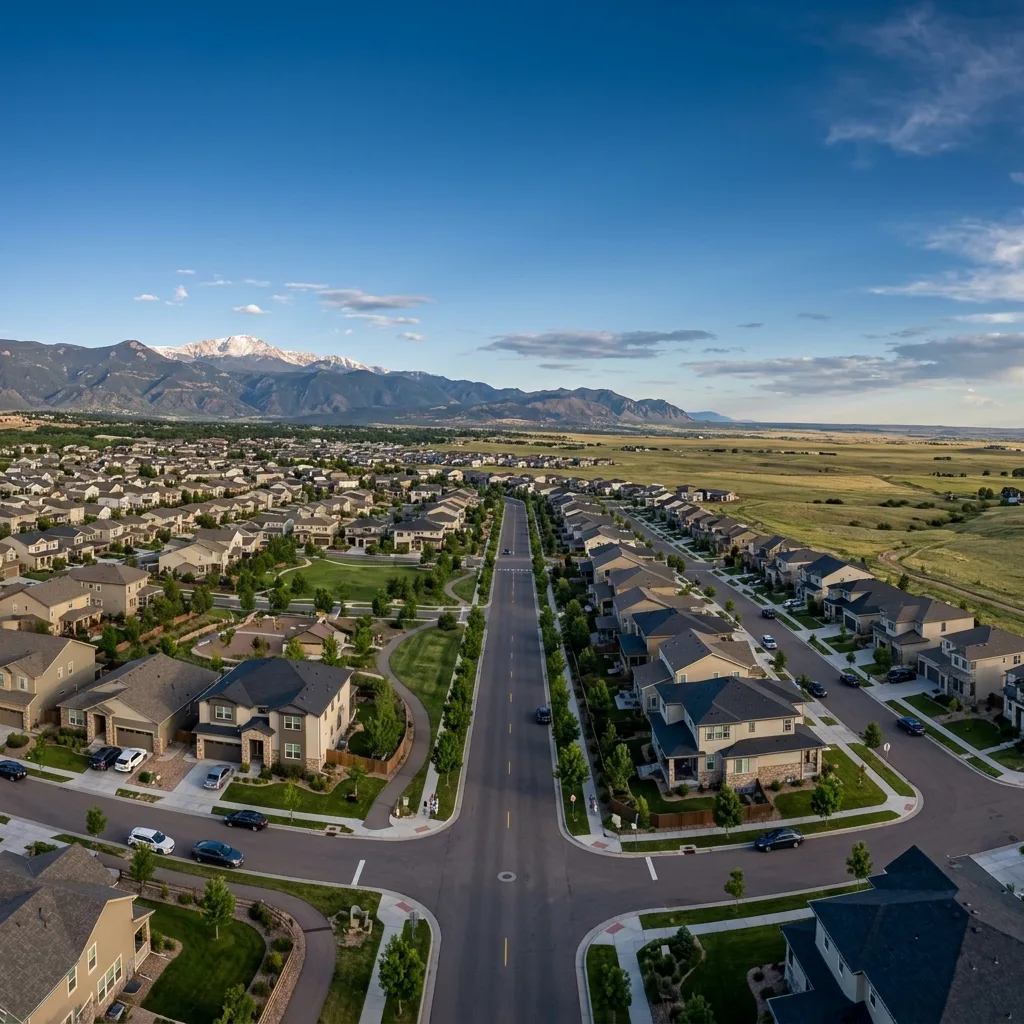
Cimarron Hills is a census-designated place on the eastern edge of Colorado Springs in unincorporated El Paso County. With a population of approximately 18,000, it is a primarily residential community characterized by a mix of single-family homes, townhouses, and apartment complexes built predominantly during the 1970s–2000s expansion period. Its proximity to Peterson Space Force Base and the Powers Corridor commercial district makes it a popular area for military families and working professionals.
The eastern exposure of Cimarron Hills creates a specific challenge for heating systems: wind-driven heat loss. Homes with west-facing walls and windows take the brunt of cold eastern plains winds, and poorly sealed building envelopes lose heat rapidly during these events. We frequently find that furnaces in wind-exposed Cimarron Hills homes struggle not because the furnace is malfunctioning, but because the home is losing heat faster than the furnace can produce it. In these cases, we recommend both furnace optimization and weatherization improvements for the best results.
Cimarron Hills Furnace Failure Modes by Building Era
Heating demands and failure patterns in Cimarron Hills vary significantly depending on the age of your property and existing ductwork infrastructure.
1950s–1980s Homes
Cimarron Hills grew up alongside Peterson Air Force Base in the mid-20th century, and many of these established homes still run 80% AFUE natural draft furnaces. Key failures: cracked heat exchangers from altitude thermal stress, faulty pilot assemblies, rusted draft hoods, and uninsulated ductwork causing 25–35% heat loss.
1990s–2000s Homes
Infill construction and later subdivisions from this era commonly use mid-efficiency forced-air units. Primary issues: failed igniters from thermal shock at 6,100 ft, flame sensor oxidation triggering lockouts, and weak blower capacitors.
2010s–Present Builds
Newer homes in the area feature 95–98% AFUE condensing furnaces. Main issues: uncalibrated gas valves (builders skipping altitude derating), condensate drain freeze-ups, and pressure switch errors.
Why 6,100-Foot Elevation Changes Everything About Your Furnace
At 6,100 feet, Cimarron Hills sits just 65 feet higher than central Colorado Springs, requiring a 24.4% BTU derating — marginally higher than the city center but functionally very similar. The more significant factor in Cimarron Hills is the community's exposure to eastern plains weather patterns. Unlike west-side Colorado Springs neighborhoods that are sheltered by the foothills, Cimarron Hills receives the full force of cold fronts that sweep across the eastern Colorado plains. Wind chill temperatures during these events can drop well below zero, putting extreme demand on heating systems and exposed ductwork in attics and crawl spaces.
| Parameter | Sea Level | Cimarron Hills (6,100 ft) |
|---|---|---|
| Atmospheric Pressure | 14.7 PSI | ~11.51 PSI |
| BTU Derating Required | 0% | 24.4% |
| 100,000 BTU Furnace Output | 100,000 BTU | 75,600 BTU |
| Gas Manifold Pressure | 3.5" WC | ~2.7" WC |
| High-Altitude Kit | Not required | Required ✓ |
| Combustion Analysis | Recommended | Essential ✓ |
Our 5-Step Altitude-Calibrated Diagnostic Protocol for Cimarron Hills
Every furnace service call in Cimarron Hills follows an objective, 5-step engineering process to diagnose root causes and guarantee safe operation.
Gas Pressure Testing
We measure line pressure and adjust manifold pressure to high-altitude specs for Cimarron Hills's 6,100-foot elevation (~3.1–3.2" WC).
Orifice Verification
We verify orifices are resized for the 24.4% BTU reduction. Sea-level orifices are replaced with high-altitude drill sizes.
Combustion Analysis
Digital probes measure CO (PPM), O₂ %, CO₂ %, stack temperature, and efficiency to confirm clean burn.
Airflow Audit
Lower air density at 6,100 ft reduces heat capacity. We measure static pressure and adjust blower speed for ideal temperature rise.
Heat Exchanger Inspection
Optical cameras inspect exchanger cells for micro-fractures, seam separation, or soot from miscalibration.
What We Know About Heating in Cimarron Hills
Cimarron Hills benefits from its proximity to our office — at approximately 5 miles, it is our closest service area. This means emergency response times are consistently under 60 minutes, and we can often arrive within 30–40 minutes during normal business hours. The community includes several distinct housing developments from different decades. Properties near the intersection of Galley Road and Powers Boulevard tend to be from the 1980s–1990s, while developments farther east along Stetson Hills Boulevard are newer. Each era has its own typical furnace systems and common failure points.
Heating Services Available for Cimarron Hills Residents
Every service includes altitude calibration for 6,100 feet — no exceptions.
Furnace Repair
Same-day diagnosis and repair for all brands. Calibrated for Cimarron Hills's 6,100-foot elevation with combustion analysis included.
Learn more →Emergency Repair
24/7 emergency response to Cimarron Hills. Typical arrival: under 60 min. No-heat calls dispatched immediately.
Learn more →Installation
New furnace installation sized for your Cimarron Hills home with proper 24.4% altitude derating and Manual J calculations.
Learn more →Maintenance
21-point seasonal tune-up including altitude-specific combustion analysis. Recommended annually for Cimarron Hills homes.
Learn more →Heating Repair
Complete heating system diagnostics — ductwork, thermostats, zone controls, and distribution for Cimarron Hills properties.
Learn more →Heat Pump Service
Heat pump repair and installation optimized for Cimarron Hills's 6,100-foot elevation and climate conditions.
Learn more →What to Do If Your Furnace Fails in Cimarron Hills During a Winter Freeze
During severe cold snaps in El Paso County, sub-zero temperatures can freeze household plumbing within 4 to 8 hours of heating loss. If your furnace shuts down in Cimarron Hills, perform these immediate steps:
- Verify Thermostat Power & Mode: Ensure the thermostat screen is illuminated, set to "HEAT", and the target temperature is set at least 5°F above ambient room temperature. Replace dead batteries if applicable.
- Check Air Filter Condition: A heavily clogged filter restricts airflow, tripping the furnace high-limit thermal switch and shutting off gas burners. Replace dirty filters and power-cycle the furnace at the service switch.
- Inspect Exterior PVC Vent Pipes: For high-efficiency condensing furnaces, inspect external side-wall PVC intake and exhaust pipes for ice caps, drifting snow, or bird nests blocking airflow.
- Protect Plumbing Pipes: Open kitchen and bathroom cabinet doors under sinks along exterior walls, turn faucets to a slow trickle, and open all interior room doors to circulate warm air.
- Call +1 (719) 602-8787 for 24/7 Priority Dispatch: Contact our local dispatcher immediately. Our technicians are on standby for Cimarron Hills with typical arrival times under under 60 min.
24/7 Cimarron Hills Emergency Hotline
No heat in your Cimarron Hills home? Our emergency response team is available 24/7/365 with fully stocked service vehicles.
📞 Call NowCall Now — Same-Day Service to Cimarron Hills
Frequently Asked Questions — Furnace Service in Cimarron Hills
Direct Answer: Cimarron Hills is just 5 miles from our headquarters. Average emergency dispatch response time is under 45 minutes for no-heat emergencies 24/7/365.
Direct Answer: Cimarron Hills is directly exposed to prairie wind drafts. Severe gusts blow down exterior flue terminations, causing pressure switch lockouts or burner flame flickering.
Direct Answer: Yes. We service single-family homes, multi-family apartment communities, and HOA townhomes along Powers Blvd and Constitution Ave.
Direct Answer: Goodman, Rheem, Carrier, Lennox, and Trane are the most common brands in 1980s to 2000s Cimarron Hills developments. We carry OEM parts for all major brands on our trucks.
Direct Answer: Yes. At 6,100 ft elevation, thinner air requires a 24.4% reduction in gas fuel input (4% per 1,000 ft) to ensure complete combustion and prevent dangerous CO buildup.
Direct Answer: Yes. Wind gusts can crack unanchored PVC vent terminations or blow debris into intake pipes. We install heavy-duty wind caps and wall anchors.
Direct Answer: Inspect 1-inch pleated filters every 30 days and replace them every 30 to 60 days during active winter months. Replace 4-inch deep media filters every 6 to 9 months.
Direct Answer: Homeowners qualify for up to $2,000 in Federal IRA tax credits for heat pumps, up to $600 for qualifying 97%+ AFUE furnaces, and local Colorado Springs Utilities (CSU) rebates.
Direct Answer: Low ambient humidity combined with uncalibrated high-altitude gas pressure accelerates carbon film buildup on flame sensor rods ($100–$200 repair).
Direct Answer: Yes. We operate 24/7 priority emergency dispatch for Cimarron Hills with flat-rate diagnostic pricing and zero emergency travel fees.
Expert Furnace Service Calibrated for Cimarron Hills's Elevation
Every repair, installation, and tune-up includes altitude calibration for 6,100 feet. Call any time — 24/7 emergency service available.