
Emergency Furnace Repair Colorado Springs — 24/7 No-Heat Response
Your furnace stopped working in the middle of a Colorado Springs winter night. The temperature inside your home is dropping. Pipes are at risk of freezing. Your family needs heat now. We dispatch licensed, altitude-certified furnace technicians to your home in under 60 minutes — 24 hours a day, 7 days a week, 365 days a year. No extra charge for nights, weekends, or holidays.
How Do I Get Emergency Furnace Repair in Colorado Springs?
Call +1 (719) 602-8787 right now. We provide 24/7 emergency furnace repair throughout Colorado Springs and 13 surrounding communities. A licensed technician is dispatched within minutes, with an average on-site arrival time of under 60 minutes. Our emergency diagnostic fee is $99, which is credited toward the cost of repair. There is no premium surcharge for nighttime, weekend, or holiday emergency calls. We carry the most common replacement parts on every service vehicle — including igniters, flame sensors, gas valves, blower motors, control boards, and pressure switches — so most emergency repairs are completed in a single visit without requiring a return trip for parts.
What To Do Right Now If Your Furnace Stops Working
Before you call us, take these immediate steps to protect your family and your home. These actions can prevent pipe damage, reduce heat loss, and ensure your safety while our technician is en route.
Safety Check — Gas & CO
If you smell natural gas (rotten egg odor), evacuate immediately. Do not flip light switches. Call 911 and Colorado Springs Utilities from outside. If your CO detector is alarming, evacuate and call 911. These are life-safety emergencies that take priority over furnace repair. Once the property is cleared, call us at +1 (719) 602-8787.
Check the Basics
Verify your thermostat is set to "Heat" mode, temperature is set above current room temperature, and batteries are fresh. Check that the furnace power switch (usually near the unit) is in the "On" position. Confirm the circuit breaker labeled "Furnace" or "HVAC" has not tripped. These three checks resolve approximately 15% of emergency calls.
Inspect the Air Filter
A severely clogged air filter restricts airflow and causes the high-limit safety switch to shut down the furnace. If your filter is visibly dirty or has not been changed in 90+ days, replace it with a clean filter and reset the furnace by turning the power off for 30 seconds, then back on. This resolves roughly 10% of emergency shutdowns.
Protect Your Pipes
Open cabinet doors under kitchen and bathroom sinks to allow warm air to reach pipes in exterior walls. If temperatures are below 20°F outside, set one faucet (furthest from the water main) to a slow drip. In Colorado Springs, pipes in exterior walls can begin freezing within 4–6 hours once indoor temperatures drop below 55°F. A burst pipe causes $5,000–$15,000 in water damage on average.
Consolidate Heat & Call Us
Close doors to unused rooms to concentrate remaining warmth. If you have a portable space heater, use it in one room — keep it 3 feet from anything flammable and never leave it unattended. Then call +1 (719) 602-8787 for immediate emergency dispatch. We prioritize homes with elderly residents, infants, or medical equipment.
Why Furnace Emergencies at 6,035 Feet Are More Dangerous Than Sea Level
Colorado Springs sits at 6,035 feet above sea level — where the air contains approximately 20% less oxygen than at sea level. This reduced oxygen directly affects how your furnace burns fuel. At sea level, a minor gas valve malfunction might produce slightly elevated carbon monoxide levels that remain within safe limits. At 6,035 feet, that same malfunction can push CO levels into the danger zone because there is simply less oxygen available for complete combustion.
During a furnace emergency at altitude, the risks compound. A cracked heat exchanger that might go undetected for weeks at sea level can produce CO concentrations above 100 PPM at altitude — the level at which headaches, dizziness, and nausea begin within 2–3 hours of exposure. At 200 PPM, symptoms become severe within 1 hour. Colorado Springs' record low temperature of -27°F (February 1, 1951) demonstrates the extreme cold this region can produce, and modern winters routinely deliver sub-zero nights where furnace failure is not merely inconvenient — it is dangerous.
The 7 Most Common Emergency Furnace Failures in Colorado Springs
Based on our emergency call data across El Paso County, these are the failure modes we encounter most frequently during emergency service calls — and what causes them at altitude.
🔥 Igniter Failure (30%)
The most common emergency call. Hot surface igniters (silicon carbide or silicon nitride) crack from repeated thermal cycling. At altitude, igniters work harder because gas-air mixture is leaner, causing higher ignition temperatures. Average lifespan at 6,035 ft: 3–5 years vs. 5–7 years at sea level. Replacement cost: $150–$300.
🛑 Flame Sensor Lockout (22%)
The flame sensor oxidizes over time, building a layer of corrosion that prevents it from detecting the flame. The furnace safety board triggers a lockout after 3–4 failed ignition attempts. At altitude, leaner combustion produces more oxidation residue on the sensor. Cleaning cost: $100–$175. Replacement: $150–$250.
⚡ Gas Valve Failure (15%)
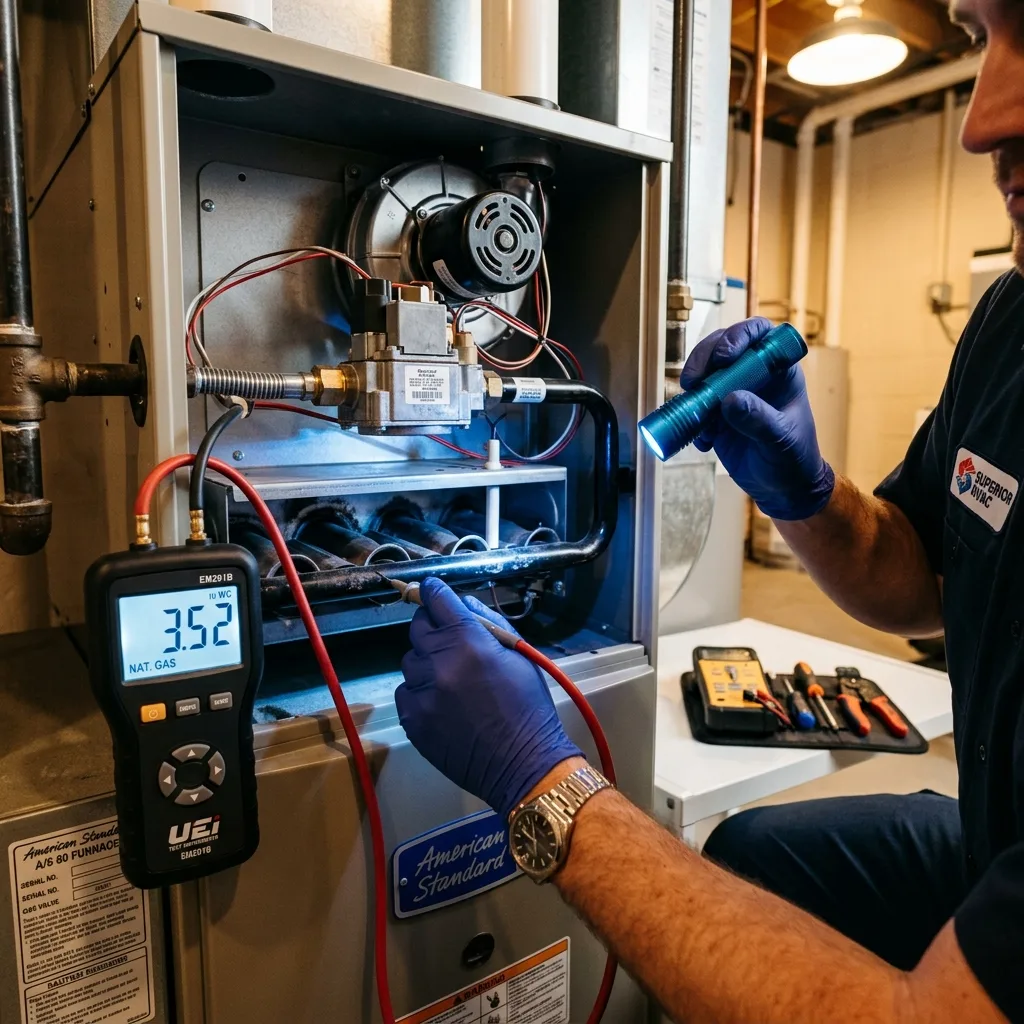
The gas valve regulates fuel flow to the burners. At altitude, gas valves operate at reduced manifold pressure (typically 3.2" WC vs. 3.5" WC at sea level). This narrower operating margin makes valves more sensitive to internal wear, contamination, and electrical failure. Replacement cost: $300–$600.
💨 Blower Motor Failure (12%)
Blower motors circulate heated air through your ductwork. At altitude, lower air density means motors run at higher speeds to move adequate heat. This increased workload accelerates bearing wear and capacitor degradation. Signs: loud humming, weak airflow, or complete stoppage. Repair: $350–$700.
⚠️ Heat Exchanger Crack (10%)
A cracked heat exchanger is the most dangerous furnace failure. It allows combustion gases (including CO) to mix with your home's air supply. At altitude, thermal stress from improper calibration accelerates metal fatigue. If detected, the furnace must be shut down immediately. Replacement: $1,000–$2,500 or full system replacement.
🔌 Control Board Failure (6%)
The control board is the furnace's brain — managing ignition sequence, safety checks, blower timing, and error codes. Power surges during Colorado Springs thunderstorms and voltage fluctuations during peak winter demand can damage sensitive electronics. Replacement: $250–$600.
Emergency Furnace Repair Costs in Colorado Springs
Transparent, upfront pricing. No hidden fees. Our $99 diagnostic fee is credited toward repair costs.
* Prices are estimates. Exact costs depend on furnace brand, model, part availability, and repair complexity. Upfront quotes provided before any work begins.
Protecting Your Colorado Springs Home While Waiting for Emergency Repair
At 6,035 feet, Colorado Springs homes lose heat faster than lower-elevation homes due to greater temperature differentials between indoor and outdoor air. A well-insulated home loses approximately 2–3°F per hour when the furnace is off and outdoor temperatures are in the teens. Poorly insulated homes can lose 4–5°F per hour. Here is how to minimize damage while our technician is en route.
🚰 Pipe Freeze Prevention
Open all cabinet doors under sinks on exterior walls. Let the faucet furthest from your water main drip slowly. If you have exposed pipes in crawl spaces or an unheated garage, wrap them with towels or blankets as a temporary insulation measure. Shut off the water main if you plan to leave the home unoccupied for more than 4 hours during a no-heat event. The average cost of water damage from a burst pipe in Colorado Springs is $7,200.
🏠 Heat Retention Strategy
Close all blinds and curtains — window glass accounts for 25–30% of heat loss in a typical home. Seal gaps under exterior doors with rolled towels. Close doors to unused bedrooms, bathrooms, and closets to concentrate remaining warmth in living areas. Cover hardwood or tile floors with blankets or rugs, as uncovered floors radiate cold. If you have a fireplace with a working damper, a small fire can sustain living area temperatures while your furnace is being repaired.
👴 Vulnerable Resident Safety
Elderly adults (65+), infants, and people with cardiovascular or respiratory conditions are at elevated risk when indoor temperatures drop below 65°F. The National Institute on Aging recommends maintaining indoor temperatures of at least 68°F for older adults. If your home temperature drops below 60°F and you have vulnerable household members, consider relocating to a neighbor's home, a warming shelter, or a hotel until repairs are complete. Hypothermia can develop at indoor temperatures that most healthy adults consider merely uncomfortable.
Why Colorado Springs Homeowners Trust Us for Emergency Furnace Repair
⏱️ Under 60-Minute Response
We maintain on-call technicians across Colorado Springs and surrounding areas 24/7/365. Our dispatch system identifies the nearest available technician and routes them to your home. Average response time across all emergency calls: 47 minutes. We serve Colorado Springs and 13 surrounding communities from Woodland Park to Fountain.
🔧 Same-Visit Resolution
Every emergency service vehicle is stocked with the 40 most common furnace repair parts — covering approximately 85% of emergency failures. This means most emergency repairs are diagnosed and completed in a single visit, typically within 60–120 minutes of arrival. No waiting for parts to be ordered. No second appointment needed.
🏔️ Altitude-Certified Technicians
Every technician on our emergency team is specifically trained in high-altitude furnace diagnostics. We carry digital combustion analyzers on every truck and verify safe CO levels before leaving any emergency job. At 6,035 feet, proper altitude calibration is not optional — it is a safety requirement that many heating companies overlook.
💰 No After-Hours Surcharge
Many general heating and cooling companies charge 1.5x–2x for after-hours service. We believe furnace emergencies are not scheduled events, and you should not be penalized for having one at 2 AM. Our $99 diagnostic fee and standard repair rates apply equally at 2 PM and 2 AM, on Christmas Day and on a Tuesday in March.
📋 Upfront Pricing
Before any wrench is turned, we provide a written quote for the repair. You approve the cost before we proceed. If the repair exceeds the value of your furnace or is not economically justified, we tell you honestly and discuss replacement options — we will never push an expensive repair on a furnace that should be replaced.
🛡️ Safety-First Protocol
Every emergency repair includes a complimentary combustion safety check. We measure CO levels in the flue gas and in the living space before restoring the furnace to service. If we detect any safety concern — cracked heat exchanger, gas leak, improper venting — we will not restore the system until the issue is resolved. Your family's safety is non-negotiable.
Emergency Furnace Repair Service Areas
We provide 24/7 emergency furnace repair throughout Colorado Springs and 13 surrounding communities across El Paso and Teller Counties.
Emergency Furnace Repair — Your Questions Answered
Direct Answer: Our average emergency dispatch time in Colorado Springs is under 60 minutes. On-call technicians are stationed 24/7/365 with stocked service trucks. For mountain locations like Woodland Park or Black Forest, response times range between 60 and 90 minutes depending on winter weather.
Direct Answer: Emergency furnace repairs range from $150 to $600. Our $99 emergency diagnostic fee is credited directly toward your repair cost upon approval. Upfront written quotes are provided prior to starting work with zero hidden surcharges.
Direct Answer: Check thermostat batteries, circuit breaker, and air filter. If heat is not restored, call +1 (719) 602-8787. Open sink cabinet doors to allow warm air to reach pipes, let faucets drip slightly to prevent freezing, and keep interior doors closed.
Direct Answer: Yes. A natural gas or propane odor (rotten eggs) is a life-safety emergency. Immediately evacuate your home, avoid operating light switches or electronics, call 911 and Colorado Springs Utilities from outside, then call us at +1 (719) 602-8787 for repair once cleared.
Direct Answer: Lower atmospheric oxygen at 6,035 ft causes incomplete combustion in malfunctioning gas furnaces, generating high carbon monoxide (CO) concentrations. Every emergency repair includes a digital CO safety scan.
Direct Answer: No. Our $99 diagnostic fee and flat-rate repair pricing apply 24/7/365, including nights, weekends, and holidays throughout winter.
Direct Answer: Broken igniters (30%), flame sensor oxidation (22%), gas valve solenoid failure (15%), blower motor failure (12%), and high-limit thermal safety trips from dirty air filters (11%).
Direct Answer: Call immediately if indoor temperature drops below 55°F. Below 55°F, exterior wall plumbing pipes freeze within 4 to 6 hours during sub-zero Colorado Springs cold snaps.
Direct Answer: Yes, if used safely. Place electric space heaters on hard, non-flammable floors at least 3 feet away from curtains, furniture, or bedding. Never leave space heaters running unattended or while sleeping, and never use fuel-burning camp stoves or ovens indoors.
Direct Answer: If a specialized OEM replacement part requires 24 to 48 hours to arrive, we provide safe commercial electric room heaters to maintain safe indoor temperatures in your primary living spaces at no additional rental charge.
Your Furnace Stopped Working. We're Ready.
Licensed technicians. Fully stocked trucks. Under 60-minute response. No after-hours surcharge. Serving Colorado Springs and 13 surrounding communities 24/7/365.