📅 Dec 08, 2025 · 12 min read
Heat Pump Repair vs. Replacement
A detailed evaluation guide comparing heat pump compressor repair versus new cold-climate heat pump replacement at elevation.
Heat Pump Repair vs. Replacement →Direct Answer: Modern cold-climate heat pumps hold useful capacity down to about -5°F to -13°F, which covers the large majority of a Colorado Springs winter. The deciding number is the balance point — the outdoor temperature at which the heat pump's output equals your home's heat loss. Below that point, a backup heat source carries the load, which is why most installations here are configured as dual-fuel rather than heat-pump-only.
A heat pump does not create heat, it moves it. Even at 5°F there is extractable energy in outdoor air, and a variable-speed inverter compressor with a vapour-injection circuit can still deliver 70% to 80% of its rated capacity at that temperature. That is the technical leap that separates a 2026 cold-climate unit from the heat pumps that earned a poor reputation in Colorado two decades ago, which lost most of their output below freezing and fell back on electric resistance strips.
Altitude affects an air-source heat pump differently than it affects a furnace. A furnace is derated because thinner air carries less oxygen for combustion. A heat pump has no combustion, so it is not derated in the same way — but lower air density does reduce the mass of air crossing the outdoor coil, which slightly reduces heat-transfer capacity. In practice the effect at 6,035 feet is modest, typically a few percent, and far smaller than the effect of outdoor temperature itself.
Four numbers determine whether a cold-climate heat pump is the right choice for a specific Colorado Springs home: the calculated balance point, the HSPF2 rating, the home's electrical service capacity, and the local cost ratio between natural gas and electricity. A dual-fuel configuration lets the control logic switch to the gas furnace at whatever outdoor temperature makes the heat pump more expensive to run than gas, which is an economic crossover, not a capacity limit.
The balance point is calculated, not guessed. It is the outdoor temperature at which the heat pump's derated output curve intersects your home's heat-loss curve from the Manual J. For a reasonably insulated Colorado Springs home with a properly sized cold-climate unit, that intersection commonly falls somewhere between 5°F and 20°F. Above it the heat pump carries the whole load; below it the backup runs. Colorado Springs spends most of its heating season above that range.
Electrical capacity is the constraint that surprises homeowners most often. A cold-climate heat pump typically needs a dedicated 30 to 60 amp circuit, and if electric resistance backup is included rather than a gas furnace, the strip heat alone can draw another 40 to 60 amps. In an older Security-Widefield or Stratmoor home with a 100 amp panel, a service upgrade may be part of the project cost and has to be priced honestly at quote time.
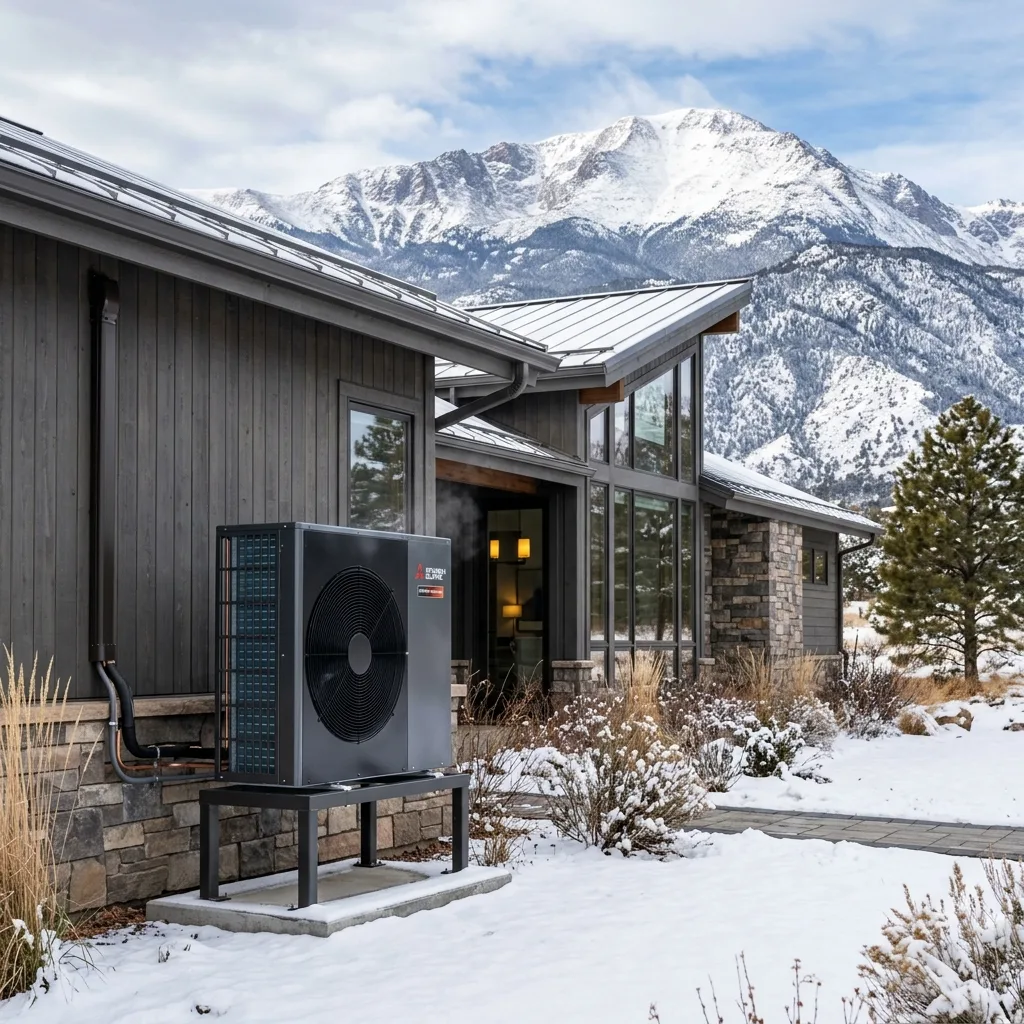
Defrost behaviour is normal and often misread as a fault. When the outdoor coil drops below freezing, moisture condenses and frosts; the unit periodically reverses to melt it, during which the outdoor fan stops, steam rises off the coil and the indoor air briefly cools. On a damp morning in Manitou Springs a defrost cycle every 30 to 90 minutes is expected behaviour. Frost that never clears, or a unit encased in solid ice, is a genuine fault and needs diagnosis.
Dual-fuel systems have two switchover settings that do different jobs and are frequently confused. The thermal balance point is a capacity limit: below it, the heat pump physically cannot meet the load alone. The economic balance point is a cost crossover: above it the heat pump is cheaper to run, below it gas is cheaper. Because Colorado Springs Utilities rates change, the economic setting deserves a review each season rather than being set once at commissioning and forgotten.
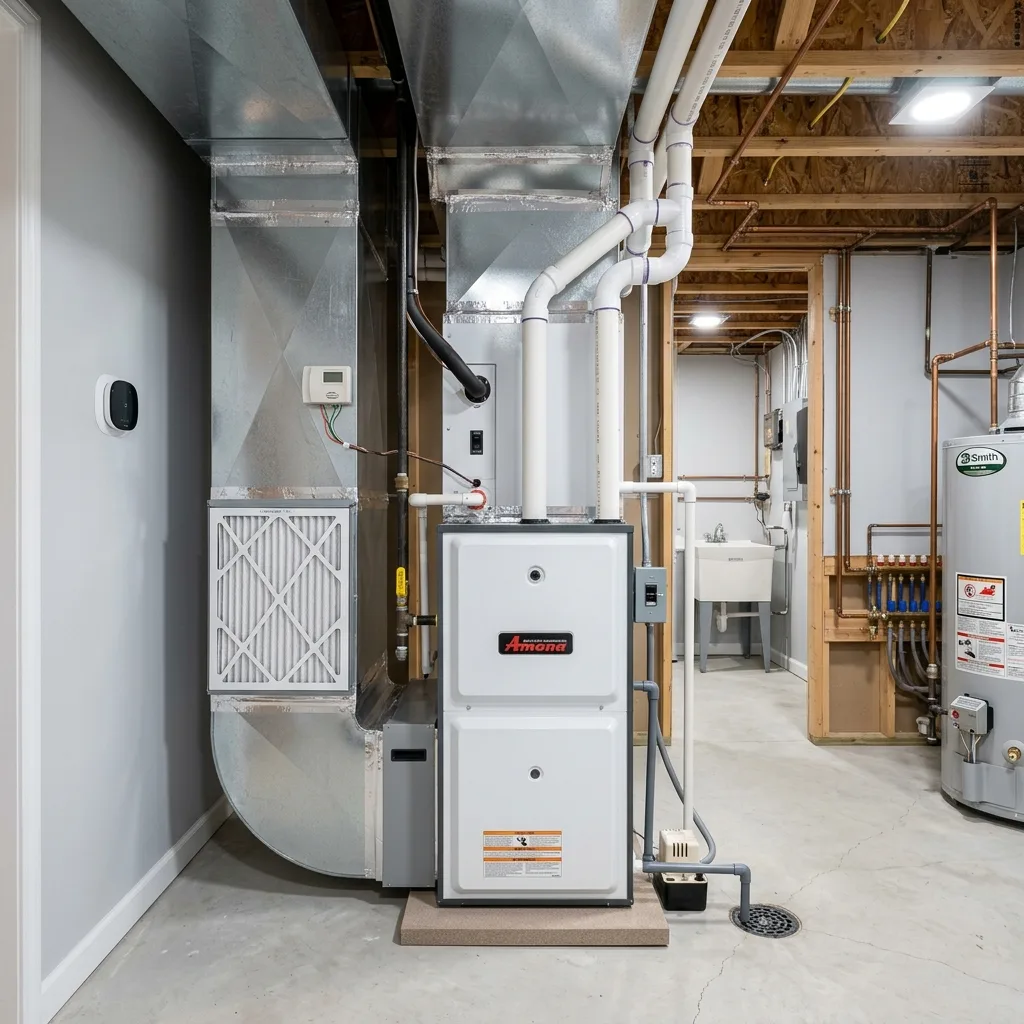
Correct switchover control also protects equipment. A dual-fuel system should lock out the compressor when the furnace fires, rather than running both simultaneously, because sending furnace-heated return air across an operating indoor coil raises head pressure and shortens compressor life. When a homeowner reports sky-high winter bills on a new dual-fuel system, mis-wired switchover logic that leaves electric strip heat energised alongside the gas furnace is one of the first things worth checking.
| Performance Factor | What It Describes | Typical Local Value | Practical Consequence |
|---|---|---|---|
| Balance Point | Where output meets heat loss | 5°F–20°F outdoors | Sets how often backup heat runs |
| Low-Temp Capacity | Output retained in deep cold | 70–80% at 5°F | Determines if backup is occasional or constant |
| HSPF2 Rating | Seasonal heating efficiency | 8.1–10.5 typical | Higher rating shortens payback period |
| Electrical Service | Panel and circuit capacity | 30–60 amp dedicated | 100 amp panels may need upgrading |
| Defrost Interval | Coil de-icing frequency | Every 30–90 min when damp | Brief cool air is normal, not a fault |
Wondering whether a heat pump can realistically carry your home through a Colorado Springs January? We calculate the balance point from your actual heat-loss figures before recommending equipment. Call 719-602-8787.
Direct Answer: Yes, for most of it. Current cold-climate models retain roughly 70% to 80% of rated capacity at 5°F and continue producing usable heat down to about -5°F to -13°F. Colorado Springs spends the bulk of its heating season above those temperatures. Most local installations are configured as dual-fuel so a gas furnace covers the coldest nights rather than electric resistance heat.
Direct Answer: Only slightly. Unlike a gas furnace, a heat pump has no combustion, so it is not derated for altitude in the same way. Lower air density does reduce the mass of air crossing the outdoor coil, trimming heat-transfer capacity by a few percent at 6,035 feet. Outdoor temperature affects output far more than elevation does.
Direct Answer: That is a defrost cycle, and it is normal. When the outdoor coil frosts over, the system briefly reverses to melt the ice. The outdoor fan stops, visible steam rises off the coil, and indoor air cools for a few minutes. On damp mornings a cycle every 30 to 90 minutes is expected. A coil that stays encased in ice is a genuine fault.
Direct Answer: A dual-fuel system pairs a heat pump with a gas furnace and switches between them based on outdoor temperature. The heat pump handles mild and moderate weather efficiently; the furnace takes over in deep cold. It is common here because it avoids expensive electric resistance backup and lets the switchover point be tuned to current Colorado Springs Utilities gas and electric rates.