
📅 Nov 15, 2025 · 10 min read
Pre-Winter Heating Prep Checklist
A month-by-month guide to preparing your heating system for Colorado Springs winters — from filter changes to combustion checks.
Winter Furnace Prep Checklist →Direct Answer: A pre-winter inspection exists primarily to find heat exchanger cracks and combustion faults before the furnace runs for months unattended. At 6,035 feet, incomplete combustion is a more likely failure mode than at sea level, and carbon monoxide is odourless. The inspection that matters includes a combustion analyser reading and a heat exchanger examination — not a visual once-over.
Colorado Springs furnaces run long. With more than 5,500 heating degree days a year, a typical local furnace logs 1,800 to 2,400 operating hours per season, and mountain properties above 7,000 feet run considerably longer. That accumulated runtime is what drives metal fatigue in the heat exchanger, wear in the inducer and blower bearings, and gradual drift in gas valve performance. An annual inspection catches those changes while they are still adjustments rather than failures.
The heat exchanger is the component that turns a maintenance issue into a safety issue. It is the metal barrier separating combustion gases from the air your blower pushes through the house. When it cracks, flue gas containing carbon monoxide can enter the airstream. Cracks commonly form at stress points where the metal repeatedly heats and cools, and they are frequently invisible from the burner compartment without a camera.
A meaningful pre-winter inspection covers four areas in order of consequence: combustion safety, heat exchanger integrity, venting and combustion air, and airflow. The first two are safety findings that can require shutting a furnace down. The second two are reliability findings that determine whether the equipment survives the season without a mid-winter callout.
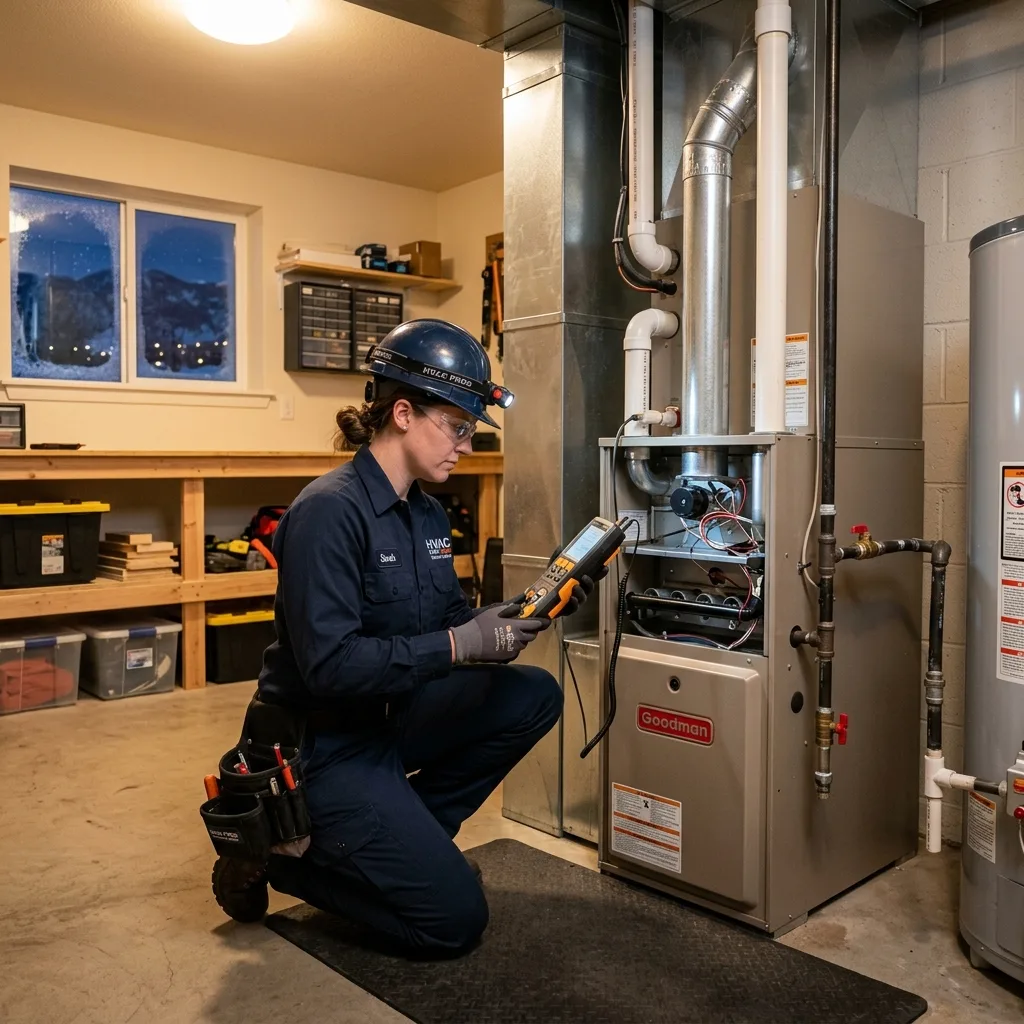
Combustion analysis is the fastest route to a defensible answer. A calibrated analyser in the flue reports carbon monoxide in parts per million, oxygen percentage, stack temperature and computed efficiency. A meaningful test is run with the blower operating, because a heat exchanger crack often only opens under the pressure differential the blower creates — a reading that jumps when the blower engages is a classic indicator worth investigating further.
Venting and combustion air are a second safety layer. An 80% furnace venting into a masonry chimney needs that chimney to be intact, correctly lined and properly sized, particularly if a water heater shares it. A 90%+ furnace venting through PVC needs its intake and exhaust terminations clear of snow, vegetation and roof-edge ice. Both configurations need adequate makeup air; a furnace sealed into a tight mechanical closet can starve itself and produce carbon monoxide without any component having failed.
Carbon monoxide alarms belong in the same conversation. Colorado requires them in homes with fuel-burning appliances, and the sensors expire, typically after five to ten years. Check the manufacture date on the back of each unit rather than relying on the test button, which confirms the horn works rather than the sensor. A working furnace and a working CO alarm are two independent safety systems, and neither substitutes for the other.
At 6,035 feet, air contains roughly 20% less oxygen per cubic foot than at sea level. A furnace delivering its full sea-level input rate into that thinner air runs fuel-rich, which produces incomplete combustion, soot deposits and elevated carbon monoxide. This is the reason derating is mandatory above 2,000 feet and why an inspection here should always confirm that the high-altitude orifice kit was actually installed and the gas valve actually adjusted.
The failure is quiet, which is what makes it dangerous. An under-derated furnace heats the house, responds to the thermostat and sounds normal. The only outward signs are soot around the burner compartment, a yellow or lazy flame instead of a crisp blue one, and a rising CO reading in the flue. Two of those three require instruments to see, which is the strongest argument for an annual professional inspection rather than a homeowner walk-around.
| Inspection Item | Method | Acceptable Finding | Consequence If Ignored |
|---|---|---|---|
| Flue carbon monoxide | Calibrated combustion analyser | Within manufacturer band | CO entering living space |
| Heat exchanger | Camera or analyser under blower load | No cracks, stable reading | Combustion gas in the airstream |
| Altitude derate | Manifold pressure vs. target | Orifice kit fitted, valve set | Overfiring, soot, elevated CO |
| Vent terminations | Visual, both intake and exhaust | Clear radius maintained | Pressure switch lockout, no heat |
| CO alarm age | Manufacture date on unit | Under 5–10 years old | Expired sensor that no longer detects |
A pre-winter inspection is worth exactly what it measures. Ours includes combustion analysis under blower load and a heat exchanger examination. Call 719-602-8787 to book before the October rush.
Direct Answer: In Colorado Springs, yes. Local furnaces log 1,800 to 2,400 operating hours a season against more than 5,500 heating degree days, and mountain properties run longer. That runtime drives heat exchanger metal fatigue, bearing wear and gas valve drift. An annual inspection catches those while they are still adjustments rather than mid-winter failures.
Direct Answer: With an inspection camera, or with a combustion analyser reading taken while the blower is running. Cracks often only open under the pressure differential the blower creates, so a carbon monoxide reading that jumps when the blower engages is a classic indicator. A purely visual check from the burner compartment misses most cracks.
Direct Answer: Air at 6,035 feet holds roughly 20% less oxygen per cubic foot than at sea level. A furnace running its full sea-level input rate into thinner air burns fuel-rich, producing incomplete combustion, soot and elevated carbon monoxide. This is why derating above 2,000 feet is mandatory and why an inspection here should verify the high-altitude orifice kit was actually fitted.
Direct Answer: Soot around the burner compartment and a yellow or lazy flame instead of a crisp blue one. The third sign, a rising flue carbon monoxide reading, requires an analyser to see. Because an under-derated furnace still heats the house and sounds normal, instruments are the only reliable way to catch the fault before it becomes dangerous.