📅 Aug 20, 2025 · 10 min read
What to Do When Furnace Fails on Cold Night
Step-by-step emergency troubleshooting guide for zero-degree furnace lockouts, including safety precautions and 24/7 dispatch.
Furnace Failure on a Cold Night →Direct Answer: A furnace blowing cold air almost always falls into one of five causes: the thermostat fan is set to ON instead of AUTO, the flame sensor is dirty and shutting the burner down seconds after ignition, the high-limit switch has tripped on restricted airflow, the ignition sequence is failing, or the gas supply has been interrupted. Check the thermostat fan setting first — it costs nothing and explains a surprising share of calls.
The fan setting is worth ruling out before anything else. With the thermostat fan switched to ON, the blower runs continuously whether or not the burner is firing, so between heating cycles it circulates room-temperature air that feels cold against the skin. Switching to AUTO means the blower runs only when there is heat to distribute. If that resolves the complaint, there was never a fault.
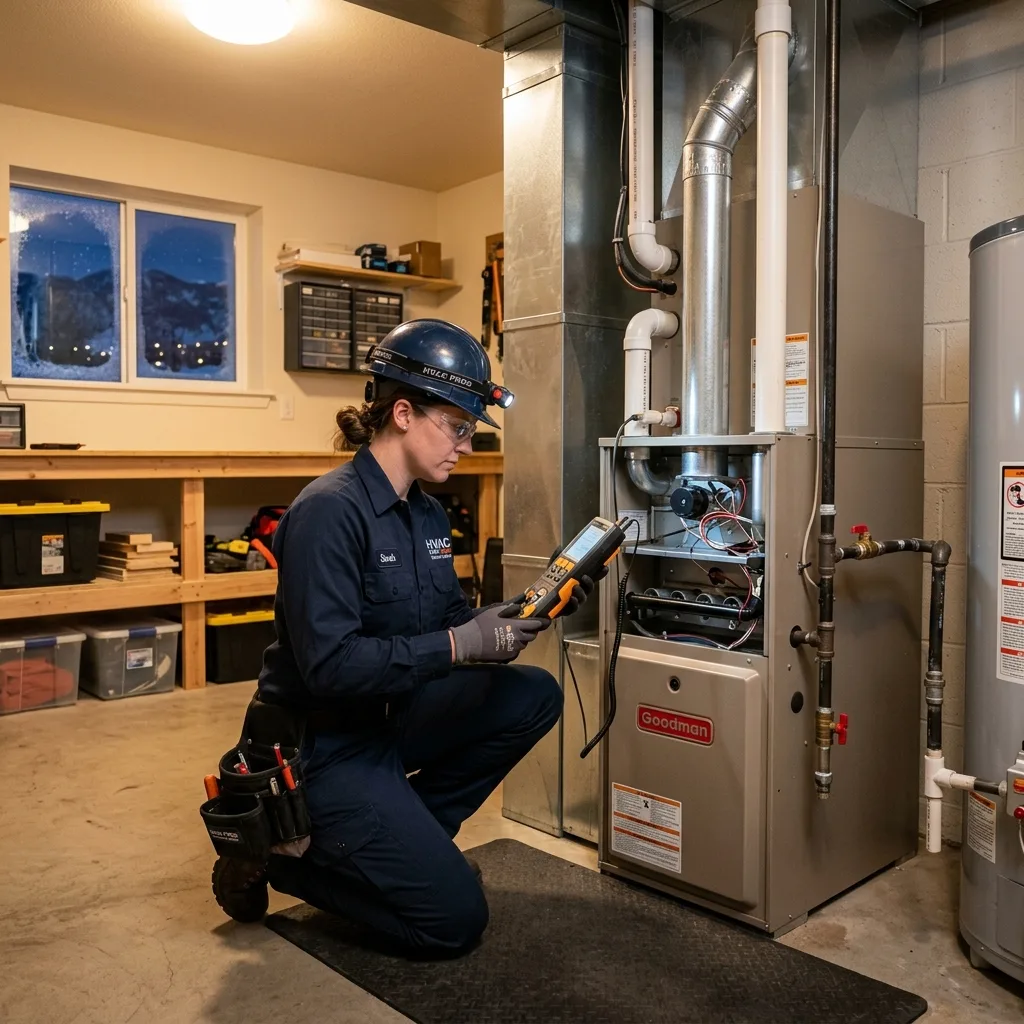
If the burner lights and then goes out after a few seconds, repeating two or three times before locking out, the flame sensor is the leading suspect. The sensor is a thin metal rod that sits in the flame and confirms combustion by passing a tiny current, typically measured in microamps. Oxidation and silica dust insulate the rod, the signal falls below threshold, and the control board shuts the gas valve as a safety response. Cleaning the rod restores the signal and is a routine service item, not a repair.
Diagnosing this complaint means separating four distinct failure patterns: continuous cold air with no burner activity at all, warm air that turns cold mid-cycle, repeated ignition attempts ending in lockout, and cold air accompanied by a running outdoor unit on a heat pump system. Each points at a different subsystem, and describing which pattern you are seeing lets a technician arrive with the right parts.
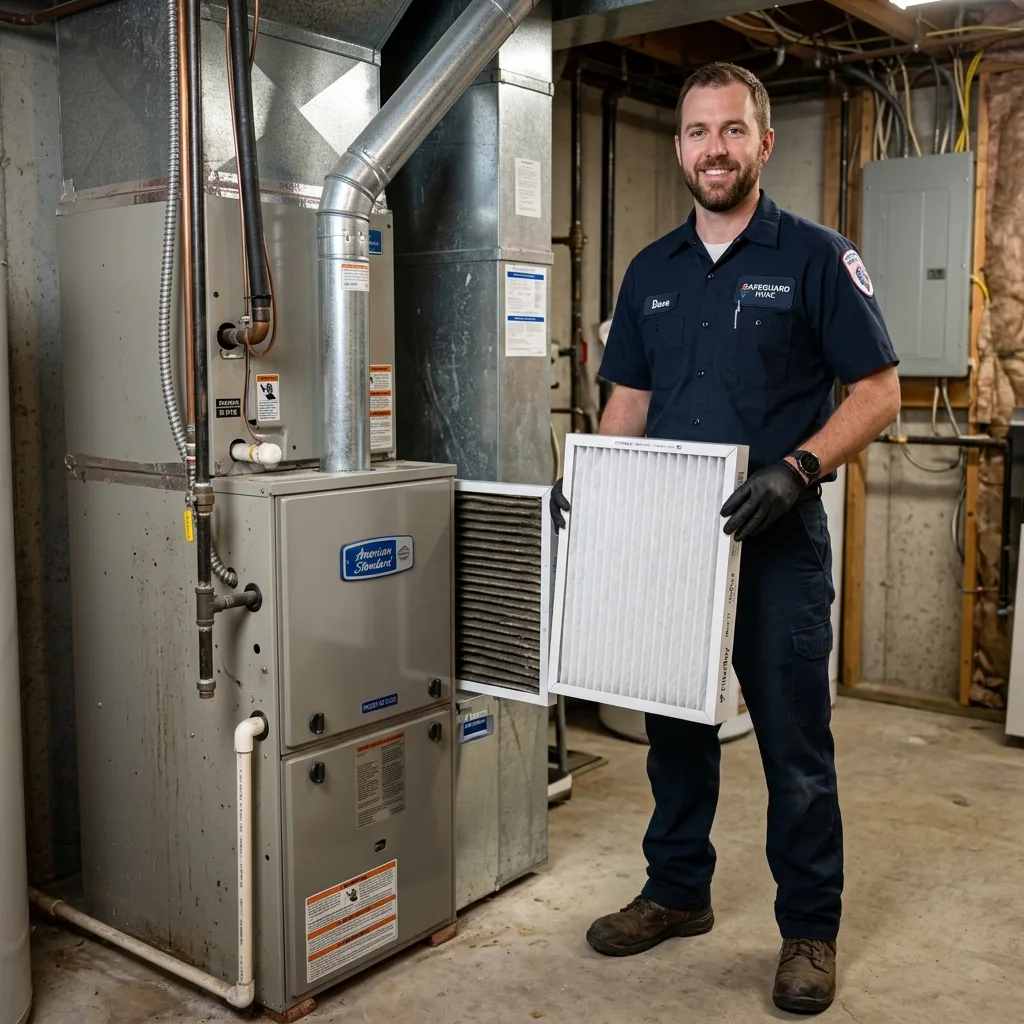
Warm air that turns cold partway through a cycle usually indicates the high-limit switch is tripping. The limit switch opens when the heat exchanger exceeds a safe temperature, cutting the burner while leaving the blower running to remove residual heat — which is precisely the cold-air symptom. The underlying cause is almost always restricted airflow: a clogged filter, closed supply registers, a collapsed flexible duct or an undersized return path.
Airflow restriction deserves more attention at altitude than it gets. Thinner air carries less mass per cubic foot, so a given volume of air removes less heat from the exchanger than the same volume would at sea level. A duct system that was marginal in Kansas is genuinely undersized at 6,035 feet, and the same restriction that produced a mild comfort complaint elsewhere trips the limit switch here. That is why static pressure measurement belongs in any diagnosis of repeated limit trips.
Repeated ignition failure that ends in lockout points at the ignition train: a cracked hot surface igniter, a failed inducer motor, a blocked pressure switch hose, or an obstructed vent termination. High-efficiency furnaces confirm draft through a pressure switch before allowing gas flow, and a snow-covered sidewall intake will prevent ignition entirely. If the furnace attempts to start three times and then falls silent with a flashing diagnostic code, note the code before cycling power — it is diagnostic information that resets when you do.
Temperature rise is the measurement that ties these symptoms together. It is the difference between supply and return air temperature, and every furnace has a rated range printed on its data plate, commonly 40°F to 70°F. When airflow is restricted, temperature rise climbs above the rated band and the limit switch eventually opens. At altitude the same restriction produces a higher rise than it would at sea level, because each cubic foot of thinner air absorbs less heat.
This is also why a furnace that was correctly commissioned still develops limit-trip symptoms years later. Filters get thicker, registers get closed off in unused rooms, furniture gets moved over returns, and flexible duct sags. None of these are equipment faults, but together they push temperature rise past its limit. Measuring external static pressure and temperature rise identifies whether the problem is the furnace or the air path serving it.
| Symptom Pattern | Most Likely Cause | What to Check First | Professional Fix |
|---|---|---|---|
| Cold air, burner never fires | Fan set to ON, not AUTO | Thermostat fan switch | None needed if setting resolves it |
| Warm then cold mid-cycle | High-limit switch tripping | Filter, closed registers | Measure static pressure and temp rise |
| Lights then dies in seconds | Dirty flame sensor | Repeat ignition attempts | Clean sensor rod, verify microamp signal |
| Three attempts then lockout | Ignition or draft fault | Diagnostic code, vent terminations | Test igniter, inducer and pressure switch |
| Cold air, outdoor unit running | Heat pump defrost cycle | Whether it clears in minutes | Normal unless frost never clears |
If the fan setting is already on AUTO and the air is still cold, the furnace is telling you something specific. Note any flashing diagnostic code before cycling power and call 719-602-8787.
Direct Answer: The five common causes are a thermostat fan set to ON rather than AUTO, a dirty flame sensor shutting the burner down seconds after ignition, a high-limit switch tripping on restricted airflow, a failing ignition sequence, and an interrupted gas supply. Check the fan setting first. If it is already on AUTO, note the pattern — constant cold air, warm-then-cold, or repeated ignition attempts — because each points to a different fault.
Direct Answer: That pattern indicates the high-limit switch is opening. It cuts the burner when the heat exchanger exceeds a safe temperature but leaves the blower running to clear residual heat, which is exactly what cold air mid-cycle feels like. The cause is nearly always restricted airflow: a clogged filter, closed registers, collapsed flexible duct or an undersized return.
Direct Answer: It is a routine service item, but it means shutting off gas and power and removing a component inside the burner compartment. The sensor is a thin rod that confirms combustion by passing a few microamps of current; oxidation drops the signal below threshold and the board closes the gas valve. A technician cleans the rod and then verifies the microamp reading, which is the step that confirms the fix rather than assuming it.
Direct Answer: Thinner air carries less mass per cubic foot, so a given airflow removes less heat from the exchanger than the same airflow would at sea level. Temperature rise climbs faster, and the high-limit switch opens sooner. A duct system that was merely marginal at lower elevation is genuinely undersized at 6,035 feet, which is why static pressure measurement belongs in any diagnosis of repeated limit trips.